Which unit?
Sieverts, often expressed as microsieverts.

Effective dose is a calculated radiation-protection quantity. It combines doses to different organs while accounting for their differing sensitivity to radiation. Its unit is the sievert, often expressed in microsieverts for dental imaging. The calculation uses reference models: it helps compare examinations broadly but does not predict an individual person’s risk.
For training & practice ↓
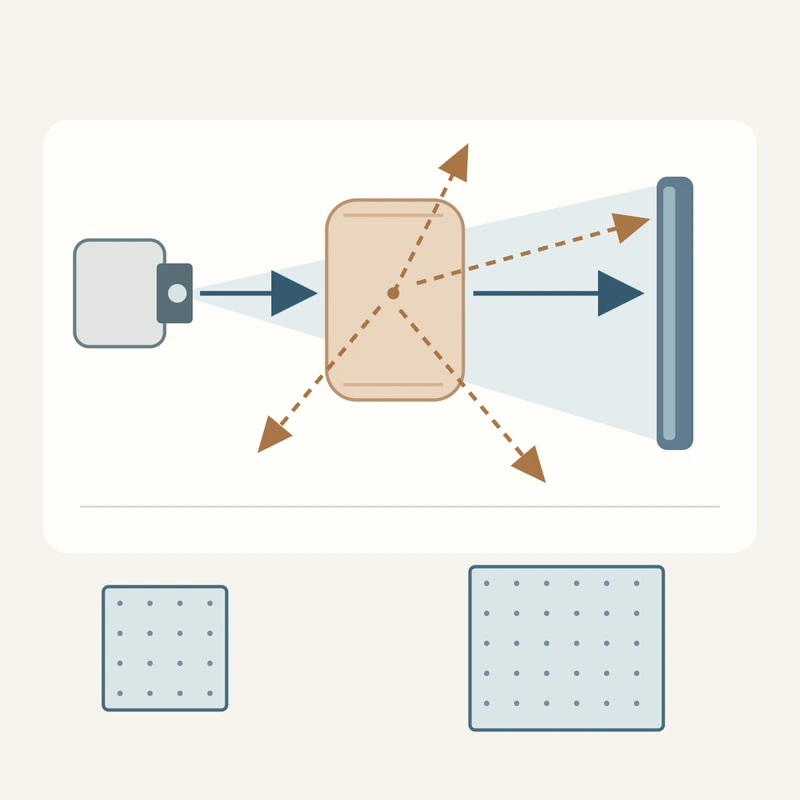
Tissues differ in their sensitivity to radiation. Effective dose combines organ doses using agreed weighting factors. The result is a calculated quantity for radiation protection.
Effective dose is expressed in sieverts; a microsievert is one millionth of a sievert. A scanner value with a different unit cannot simply be treated as the same quantity.
An image needs a clear clinical purpose. Reviewing existing images, choosing suitable technology and limiting the field of view help avoid unnecessary exposure.
Sieverts, often expressed as microsieverts.
Calculated from weighted organ doses.
The specific clinical question and expected benefit.
Three steps. No audio.
Each scene can also be selected manually.

Silent educational film with German on-screen text and simplified teaching images. Not a patient case or a promised treatment outcome. The full English explanation is available as text.
Effective dose uses sieverts and incorporates organ sensitivity. Dose–area product describes radiation and beam area; it is not a direct reading of personal risk.
No. It is calculated from organ doses and standard weightings. Measurable equipment and dose quantities are different.
Not reliably for you personally. Age, the organs exposed and other factors matter. Effective dose provides a broad indication rather than an individual forecast.
Only if it answers the clinical question. An inadequate image may lead to further exposures. Diagnostic benefit and radiation protection must be considered together.
You can bring this question to your appointment:
What question should this image answer, and could existing images or a lower exposure be sufficient?
An individual assessment can clarify the findings and whether referral is needed.
Arrange an assessmentAppointment selection at DoctolibEffective dose uses sieverts and incorporates organ sensitivity. Dose–area product describes radiation and beam area; it is not a direct reading of personal risk.
Editorial research: . General information, not an individual diagnosis or treatment recommendation. Teaching illustrations are simplified and do not depict a patient case.
If you turn this on, this website stores which guides you open, separately from advertising preferences. The markers expire after a fixed 30-day period from activation. The list is not sent to us by this feature. You can turn it off here and delete the markers.
Other people using the same browser profile can also see the markers. German and English versions share one marker. Expired entries are removed the next time you open a page with this feature; deleting browser data may remove them earlier. “Viewed” means opened, not read or completed.