Always crowding?
No; several causes are possible.

Ectopic eruption means a tooth follows an unexpected eruption path. It may emerge towards the lip or palate, or become caught against a neighbouring tooth. The cause and consequences need assessment.
For training & practice ↓
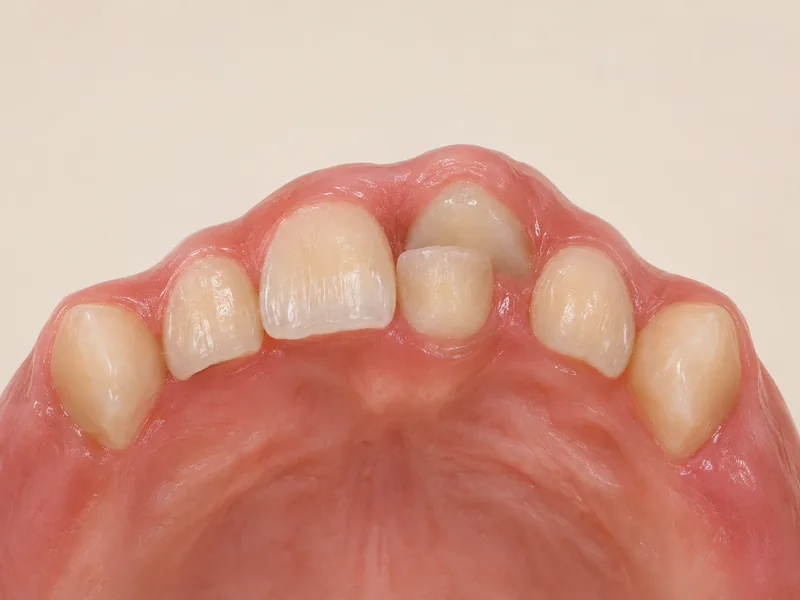
A permanent tooth may appear outside its expected position. Visible crowding is only one possible explanation.
An abnormal position can obstruct eruption or affect neighbouring teeth. Examination and, when indicated, imaging clarify the relationships.
Observation, space management or targeted treatment may be appropriate. Age alone does not determine the approach.
No; several causes are possible.
Different findings need different approaches.
No; examination and development also matter.
Three steps. No audio.
Each scene can also be selected manually.

Silent educational film with German on-screen text and simplified teaching images. Not a patient case or a promised treatment outcome. The full English explanation is available as text.
Ectopic describes an abnormal eruption path. Retention describes failure to erupt normally. The findings can coexist but are not identical.
No. This can occur during tooth replacement. Examination assesses whether the baby tooth can shed, whether there is enough space and whether treatment is needed.
Not automatically. Eruption direction, mobility, roots and available space guide the decision. Removal should follow a dental assessment.
Arrange a dental review if a tooth appears clearly out of position, eruption seems asymmetric or symptoms occur. Swelling or severe pain needs prompt assessment.
You can bring this question to your appointment:
Is this eruption path acceptable, and when should development be reviewed?
An examination can clarify the finding and any need for referral.
Arrange an assessmentAppointment selection at DoctolibEctopic describes an abnormal eruption path. Retention describes failure to erupt normally. The findings can coexist but are not identical.
Editorial research: . General information, not an individual diagnosis or treatment recommendation. Teaching illustrations are simplified and do not depict a patient case.