Which part occurs naturally?
The canal system.

An access cavity is an opening prepared through the crown into the pulp chamber. Through it, the dental team locates the canal openings for cleaning and treatment. Its shape depends on the individual tooth and any existing restorations.
For training & practice ↓
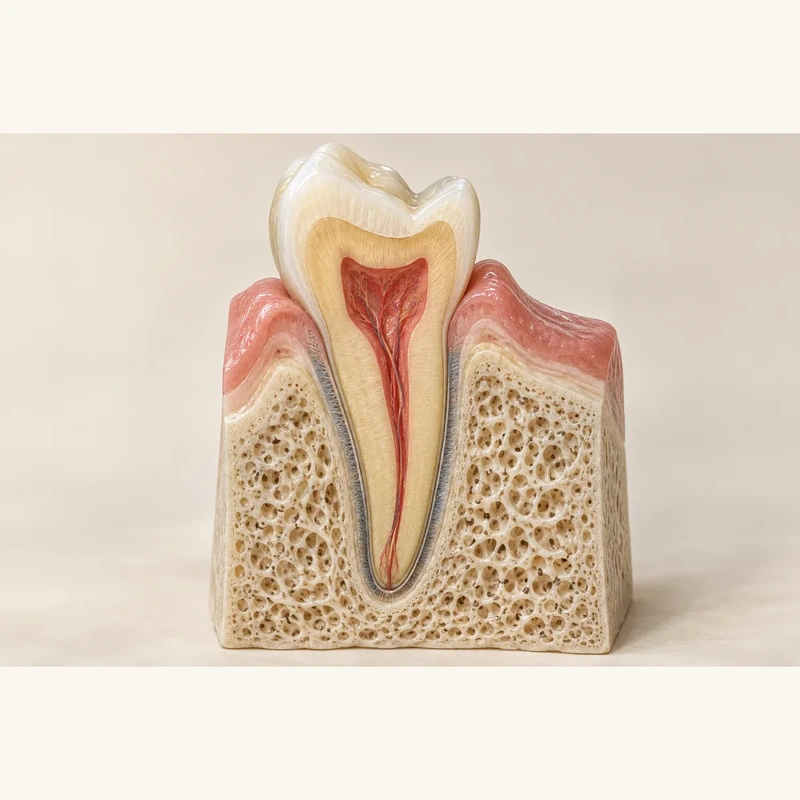
The cutaway shows the space within the crown continuing into the roots. Its position helps the clinician plan access.
Several small openings are visible on the chamber floor. Access must provide adequate visibility while preserving supporting tooth tissue.
The file in the model travels through the access into a root. Identifying the orifices allows the subsequent stages of treatment.
The canal system.
The necessary canal openings.
An intact seal.
Three steps. No audio.
Each scene can also be selected manually.

Silent film with English on-screen text and simplified teaching images.
This shapes accessible canals. The access cavity first provides a route into them.
The opening is prepared in the crown. The canal is a natural internal space in the root.
A small opening conserves tissue but may restrict visibility. The aim is access to the relevant orifices while avoiding unnecessary tissue removal.
Closure depends on the stage of treatment. A sound temporary seal is usually important between visits, followed by a suitable definitive restoration.
A question to bring along
What restoration is planned for my tooth after root canal treatment?
Contact the treating practice if the temporary seal comes out.
Choose an appointmentAppointment selection at DoctolibThe visible opening is one part of treatment. Anatomy beneath it guides the subsequent steps.
Editorial research: . General information, not an individual diagnosis or treatment recommendation. Teaching illustrations are simplified and do not depict a patient case.
If you turn this on, this website stores which guides you open, separately from advertising preferences. The markers expire after a fixed 30-day period from activation. The list is not sent to us by this feature. You can turn it off here and delete the markers.
Other people using the same browser profile can also see the markers. German and English versions share one marker. Expired entries are removed the next time you open a page with this feature; deleting browser data may remove them earlier. “Viewed” means opened, not read or completed.