What supports an endocrown?
Your own root-filled tooth.

An endocrown is a one-piece bonded restoration used for selected root-filled back teeth. Part of it fits into the former pulp chamber, without a long post extending down a root canal.
For training & practice ↓
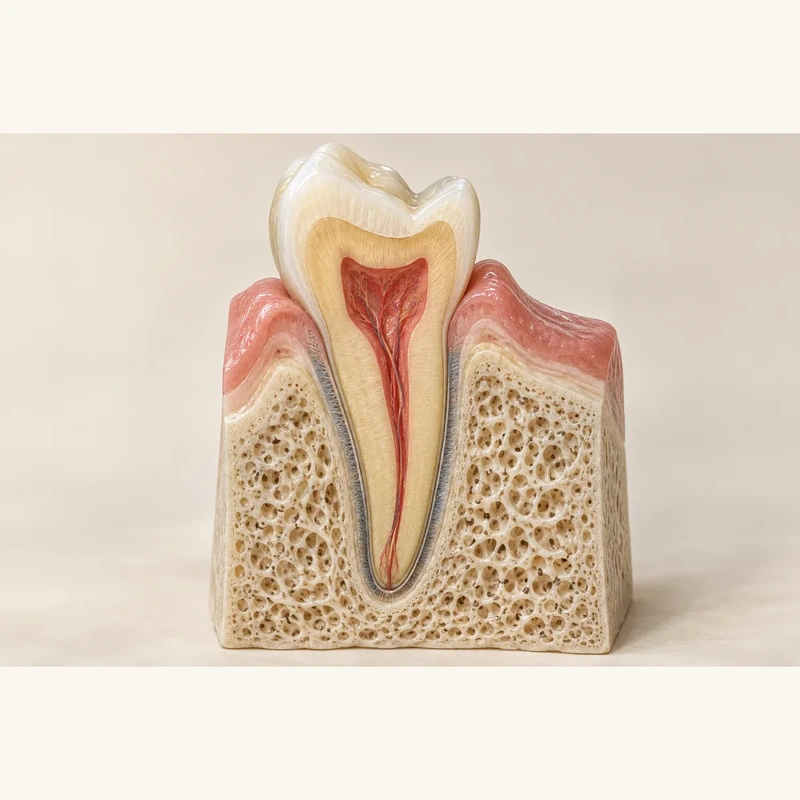
The former pulp chamber lies below the biting surface. Its shape and size are assessed together with the remaining tooth.
The short broad extension on the underside is part of the restoration. It seats in the chamber while the new biting surface takes the load.
Adhesive bonding requires suitable tooth tissue and moisture control. Margin position and biting forces influence selection.
Your own root-filled tooth.
In the former pulp chamber.
Unfavourable bonding surfaces, inaccessible margins or heavy loads.
Three steps. No audio.
Each scene can also be selected manually.

Silent film with English on-screen text and simplified teaching images.
A post and core uses a prepared root canal. An endocrown uses the coronal chamber for its shape and adhesive surfaces for additional retention.
It sits on a natural root-filled tooth. An implant uses an artificial support placed in the jaw.
With a suitable tooth, chamber geometry and bonding provide retention. A post would need space prepared inside a root canal.
No. Factors include tooth type, remaining walls, root filling quality and the ability to bond reliably. Other restorations may suit the findings better.
A question to bring along
Do the remaining walls and chamber provide enough support for a bonded endocrown?
Discuss the alternatives in light of your remaining tooth structure.
Choose an appointmentAppointment selection at DoctolibA short period of clinical follow-up cannot reliably predict how long an individual endocrown will last.
Editorial research: . General information, not an individual diagnosis or treatment recommendation. Teaching illustrations are simplified and do not depict a patient case.
If you turn this on, this website stores which guides you open, separately from advertising preferences. The markers expire after a fixed 30-day period from activation. The list is not sent to us by this feature. You can turn it off here and delete the markers.
Other people using the same browser profile can also see the markers. German and English versions share one marker. Expired entries are removed the next time you open a page with this feature; deleting browser data may remove them earlier. “Viewed” means opened, not read or completed.