What needs checking?
The margin itself and the adjacent gum.

A restoration overhang is filling material that projects beyond a tooth’s natural side contour. Plaque can collect underneath the ledge. Near the gum line this can hinder cleaning and contribute to local inflammation.
For training & practice ↓
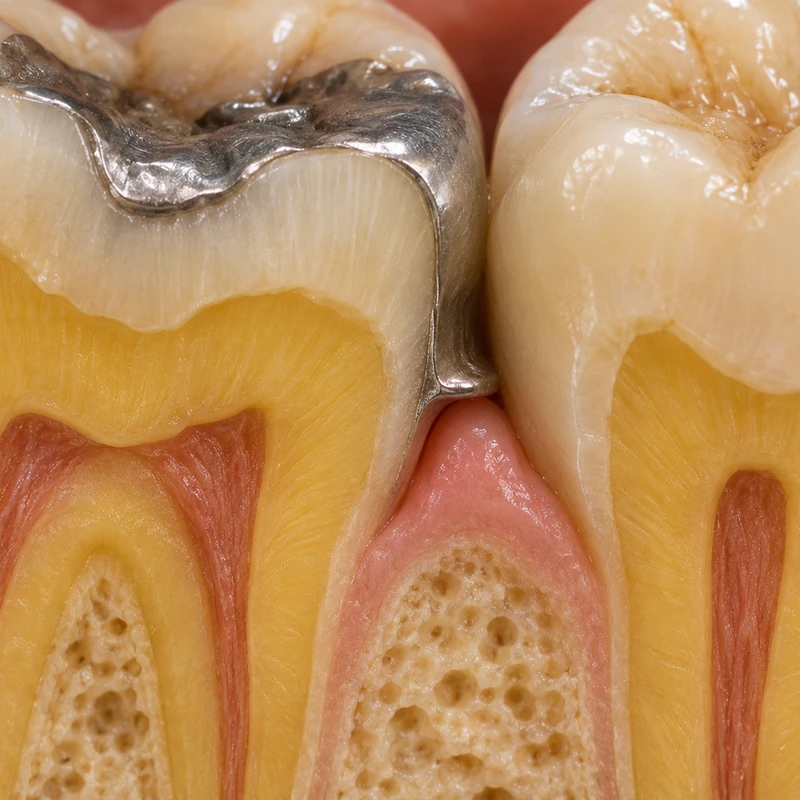
The cross-section shows a small ledge on the side of the filling. It lies below the contact with the neighbouring tooth.
If floss catches or frays, note the site. A rough margin or tight contact can also cause this.
The contour facing the neighbouring tooth matters when placing or correcting a filling. A matrix can define the shape of a new side wall.
The margin itself and the adjacent gum.
Yes, if the remainder of the restoration permits it.
Point out its exact location at review.
Three steps. No audio.
Each scene can also be selected manually.

Silent film with English on-screen text and simplified teaching images.
A gap is a space at the interface. An overhang is material projecting beyond the expected contour.
No. Bleeding has several possible causes. The dentist examines the gum, plaque and filling margin. A suitable radiograph can help assess the proximal area when indicated.
A small accessible excess can sometimes be reshaped and polished. Other defects may call for repair or replacement. The whole restoration is assessed.
Have it assessed. A file or sharp object can damage the filling, tooth or gum.
A question to bring along
Can the edge be smoothed so the space can be cleaned effectively?
If floss repeatedly catches on the same filling, have the margin and contact area checked.
Choose an appointmentAppointment selection at DoctolibAssessment distinguishes a shape defect, local gum inflammation and secondary caries. They can occur together.
Editorial research: . General information, not an individual diagnosis or treatment recommendation. Teaching illustrations are simplified and do not depict a patient case.
If you turn this on, this website stores which guides you open, separately from advertising preferences. The markers expire after a fixed 30-day period from activation. The list is not sent to us by this feature. You can turn it off here and delete the markers.
Other people using the same browser profile can also see the markers. German and English versions share one marker. Expired entries are removed the next time you open a page with this feature; deleting browser data may remove them earlier. “Viewed” means opened, not read or completed.