What tissue moves?
A segment of your own chin bone.

In bony genioplasty, an oral and maxillofacial surgeon moves a segment of the chin bone. When this is the only procedure, the tooth-bearing jaw stays in place. The facial profile can therefore change while the teeth still meet in the same way.
For training & practice ↓
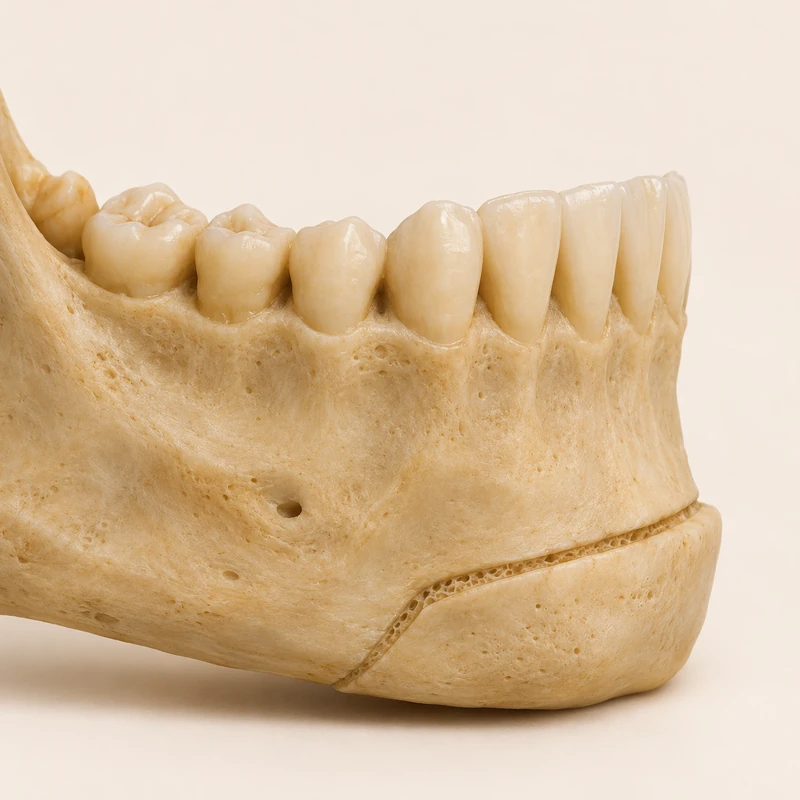
The chin segment sits below the roots of the teeth. Its position contributes to the facial profile. Depending on the plan, the surgeon may bring this part forward.
An assessment also looks at how the upper and lower teeth meet. A mismatch between the jaws raises a different planning question from the shape of the chin.
Small plates and screws can hold the repositioned bone as it heals. Swelling and altered sensation in the lower lip or chin can occur. The surgical team will discuss follow-up and recovery for your procedure.
A segment of your own chin bone.
It stays in its original position.
A change in sensation around the lower lip or chin.
Three steps. No audio.
Each scene can also be selected manually.

Silent film with English on-screen text and simplified teaching images.
An isolated chin procedure repositions the chin point. Moving the tooth-bearing lower jaw changes its relationship to the upper dental arch.
A sliding genioplasty moves your own bone. An implant augmentation adds material on top of the bone. Ask which procedure is under discussion.
The dental arches stay where they are when only the chin is moved. Genioplasty may be combined with jaw surgery. In that case, each part of the operation has its own goal.
The lower lip or chin may feel numb or tingly afterwards. Sensation may improve with time, but a change can persist. Ask the surgical team when to get in touch.
A question to bring along
Would the procedure move my chin alone or also reposition a tooth-bearing jaw?
A dental examination can help prepare a referral to orthodontics or maxillofacial surgery if you have questions about your bite or chin profile.
Choose an appointmentAppointment selection at DoctolibChin position and the relationship of the dental arches are separate findings. Both need assessment before a decision.
Editorial research: . General information, not an individual diagnosis or treatment recommendation. Teaching illustrations are simplified and do not depict a patient case.
If you turn this on, this website stores which guides you open, separately from advertising preferences. The markers expire after a fixed 30-day period from activation. The list is not sent to us by this feature. You can turn it off here and delete the markers.
Other people using the same browser profile can also see the markers. German and English versions share one marker. Expired entries are removed the next time you open a page with this feature; deleting browser data may remove them earlier. “Viewed” means opened, not read or completed.