What timing should I note?
The duration of a single attack as well as how often it occurs.

Glossopharyngeal neuralgia is a rare nerve pain condition. Brief, intense attacks usually affect one side of the deep throat, back of the tongue or tonsil area. Pain may reach the ear or the area below the jaw angle. More common causes of pain on swallowing also need medical assessment.
For training & practice ↓
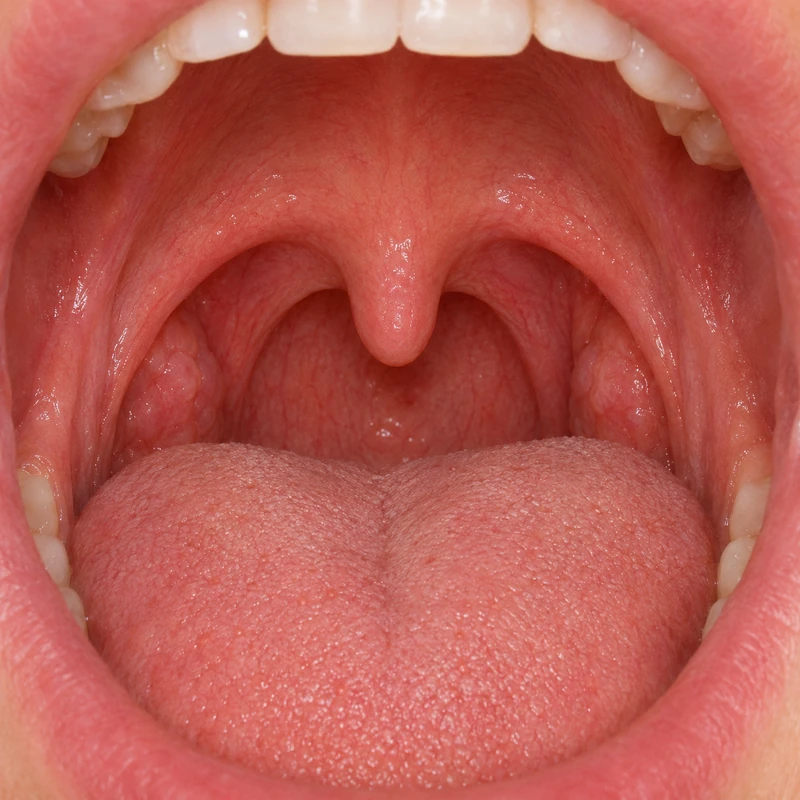
Pain may strike on the first swallow or in the middle of speaking. Some people describe a jolt like an electric shock. Note which side is affected and where the pain starts.
The tongue base, throat, tonsil region and ear are possible sites. Pain beneath the jaw angle may at first feel like a dental problem. Its location alone does not establish the cause.
Duration, triggers and other symptoms guide investigation. Depending on the findings, clinicians may examine the teeth and throat and arrange neurological or ear, nose and throat assessment. MRI can help look for a cause.
The duration of a single attack as well as how often it occurs.
Yes, even when it starts deep in the throat.
Fainting during or after the pain.
Three steps. No audio.
Each scene can also be selected manually.

Silent film with English on-screen text and simplified teaching images.
Both can cause sudden shooting pain. Clinicians distinguish them partly by where an attack starts and what triggers it. Mention specifically if your pain begins deep in the throat on swallowing.
The international headache classification describes attacks lasting a few seconds to two minutes. There may be pain-free gaps. Persistent throat pain warrants evaluation for other possible causes.
Pain can be referred from the throat to the ear. An examination helps distinguish ear, throat, dental and nerve causes. A normal dental finding alone does not establish neuralgia.
Circulatory symptoms occasionally accompany attacks. If the person is unconscious or has difficulty breathing, call emergency services on 112 in Germany immediately. A faint that has already passed also needs prompt medical attention.
A question to bring along
What other causes could explain this pain, and which clinician should investigate it further?
Recurrent shooting pain on swallowing warrants prompt medical assessment. If a tooth may be involved, a dental examination can contribute to the assessment.
Choose an appointmentAppointment selection at DoctolibWhere pain starts, where it travels and how long it lasts are more informative than simply describing it as toothache.
Editorial research: . General information, not an individual diagnosis or treatment recommendation. Teaching illustrations are simplified and do not depict a patient case.
If you turn this on, this website stores which guides you open, separately from advertising preferences. The markers expire after a fixed 30-day period from activation. The list is not sent to us by this feature. You can turn it off here and delete the markers.
Other people using the same browser profile can also see the markers. German and English versions share one marker. Expired entries are removed the next time you open a page with this feature; deleting browser data may remove them earlier. “Viewed” means opened, not read or completed.