Gold placed directly in the tooth
Small portions of gold are compacted within the tooth in this direct technique.

Small portions of prepared gold are compacted in the tooth to form a direct gold restoration. A gold inlay is fabricated as a separate piece and fitted into the tooth afterwards.
For training & practice ↓
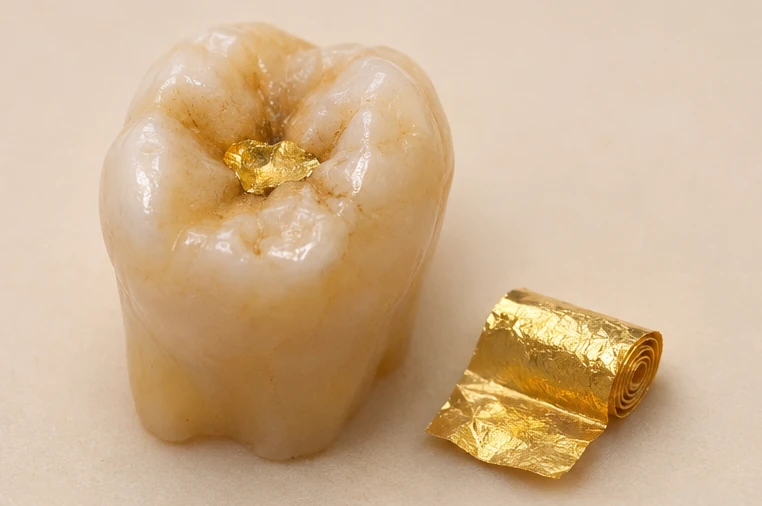
Small portions of gold are compacted within the tooth in this direct technique.
The gold inlay shown is shaped separately before insertion.
This tooth-coloured inlay is also a separate piece. Direct and indirect describe the fabrication route.
Small portions of gold are compacted within the tooth in this direct technique.
The gold inlay shown is shaped separately before insertion.
This tooth-coloured inlay is also a separate piece. Direct and indirect describe the fabrication route.
Small portions of gold are compacted within the tooth in this direct technique.
The gold inlay shown is shaped separately before insertion.
This tooth-coloured inlay is also a separate piece. Direct and indirect describe the fabrication route.
Three steps. No audio.
Each scene can also be selected manually.

Silent film with English on-screen text and simplified teaching images.
A small instrument delivers controlled pressure or tapping to compact the increments. The gold pieces can cohere to form one solid filling.
A small instrument delivers controlled pressure or tapping to compact the increments. The gold pieces can cohere to form one solid filling.
Colour does not tell you how a restoration was made. A laboratory-made inlay or metal crown can also look gold. The original treatment record may identify it.
Access, moisture control and the size of the defect matter. Direct gold placement is demanding. The choice of restoration depends on the individual tooth.
A question to ask
Do my records identify my restoration as a gold inlay or a direct gold filling?
Choose an appointment to discuss your own tooth or restoration.
Choose an appointmentAppointment selection at DoctolibDirect and indirect refer to where the restoration takes shape. Also describe the material, extent and method of retention.
Editorial research: . General information, not an individual diagnosis or treatment recommendation. Teaching illustrations are simplified and do not depict a patient case.
If you turn this on, this website stores which guides you open, separately from advertising preferences. The markers expire after a fixed 30-day period from activation. The list is not sent to us by this feature. You can turn it off here and delete the markers.
Other people using the same browser profile can also see the markers. German and English versions share one marker. Expired entries are removed the next time you open a page with this feature; deleting browser data may remove them earlier. “Viewed” means opened, not read or completed.