Is the distress real?
Yes, even without confirmed unusual odour.

Halitophobia describes a persistent strong belief or concern that one has offensive breath despite an appropriate professional assessment that does not confirm a corresponding odour. The distress is real. The term should not be assigned on the basis of one normal reading; physical findings and psychological burden require careful assessment.
For training & practice ↓
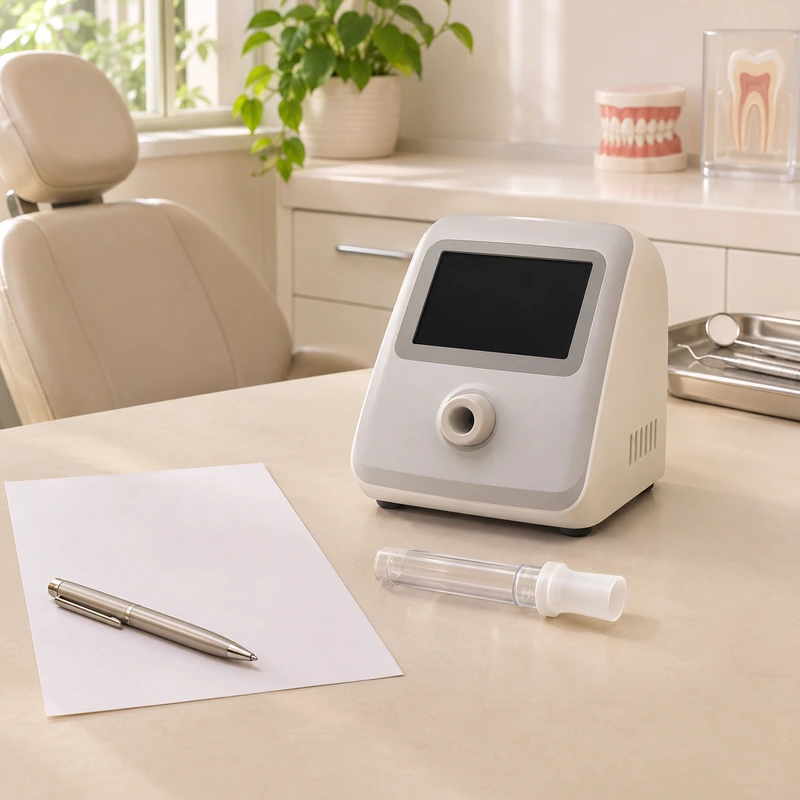
History, an oral examination and professional odour assessment belong together. Neither a single device reading nor self-perception determines the diagnosis.
Repeated checking, withdrawal or fear of conversation can substantially affect daily life. These effects deserve support even when no unusual odour is detected.
Following assessment, psychological or psychiatric professionals may help. Further dental procedures without an appropriate indication do not specifically address persistent fear of bad breath.
Yes, even without confirmed unusual odour.
No. The overall assessment matters.
Dental care and, when appropriate, psychological or psychiatric professionals.
Three steps. No audio.
Each scene can also be selected manually.

Silent educational film with German on-screen text and simplified teaching images. Not a patient case or a promised treatment outcome. The full English explanation is available as text.
Not every concern about breath is halitophobia. Persistence despite appropriate assessment and the person’s burden matter; genuine bad breath may also occur.
No. The concern and its consequences can be very distressing. The aim is respectful assessment and appropriate support, not dismissal.
No. Structured professional assessment matters. Temporary odour, genuine oral disease and a persistent belief about odour need to be distinguished.
Without an appropriate cause to treat, they are not a targeted solution. Repeated changes or excessive use may cause additional problems; discuss oral care and the distress with your team.
You can bring this question to your appointment:
How can we review my previous findings and the impact of my concern about breath together?
An individual examination can clarify the findings and suitable next steps.
Arrange an assessmentAppointment selection at DoctolibNot every concern about breath is halitophobia. Persistence despite appropriate assessment and the person’s burden matter; genuine bad breath may also occur.
Editorial research: . General information, not an individual diagnosis or treatment recommendation. Teaching illustrations are simplified and do not depict a patient case.
If you turn this on, this website stores which guides you open, separately from advertising preferences. The markers expire after a fixed 30-day period from activation. The list is not sent to us by this feature. You can turn it off here and delete the markers.
Other people using the same browser profile can also see the markers. German and English versions share one marker. Expired entries are removed the next time you open a page with this feature; deleting browser data may remove them earlier. “Viewed” means opened, not read or completed.