Why keep it?
To make the implant system and components traceable at future appointments.

A dental implant passport records important details about inserted implants and, where applicable, their abutment components. These may include the manufacturer or system, type, position, dimensions and batch details. The information helps at later check-ups or when matching replacement components, including in another practice. The passport supplements treatment records; it does not replace an examination, radiographs or the complete clinical record.
For training & practice ↓
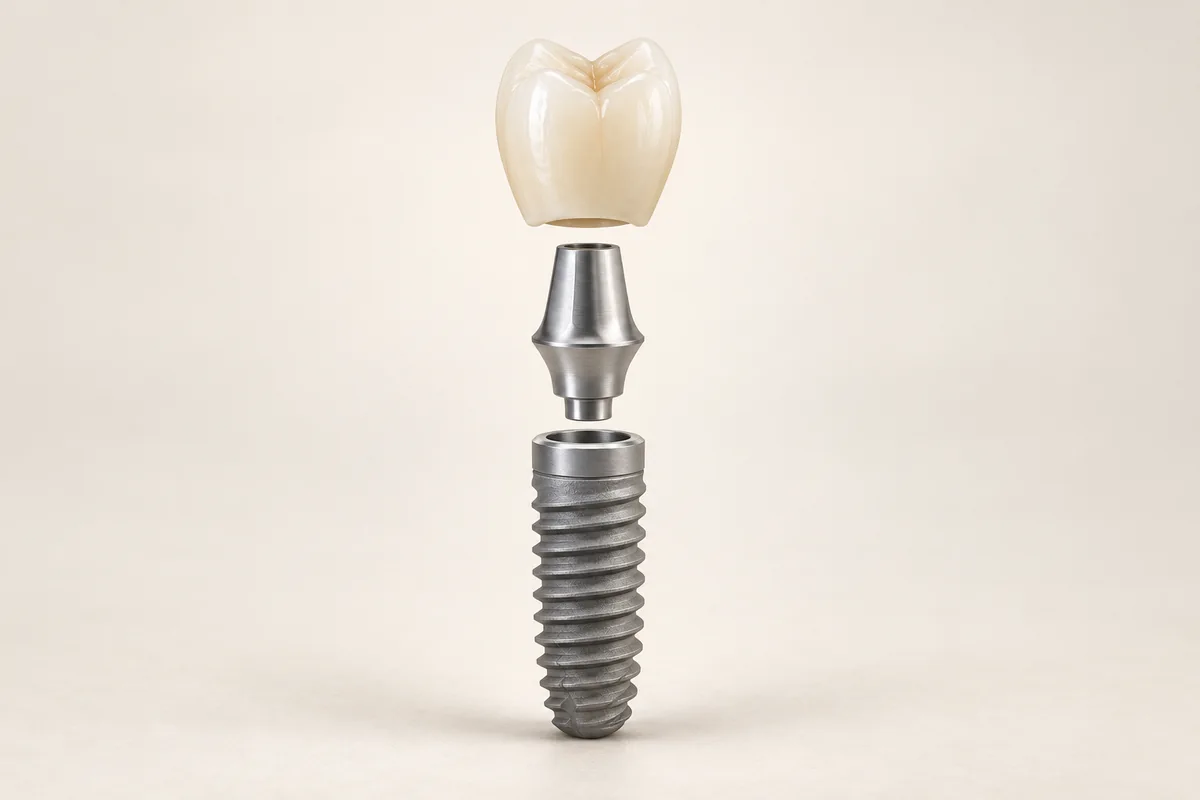
Dental implants and abutments differ between systems. Details such as implant type, position, diameter, length and batch number are recorded in the passport. This helps establish which implant was placed where. The fields included depend on the particular passport.
If an abutment or part of a restoration needs replacement, the records help identify existing components. The passport can be useful when changing practices. On its own, however, it establishes neither the implant’s current condition nor the treatment that may be needed.
Keep the passport with your important treatment documents and bring it to relevant check-ups. Further entries can be added there. If you can no longer find it, ask the treating practice about the implant details recorded in your clinical notes.
To make the implant system and components traceable at future appointments.
To implant-related check-ups and when changing treating practices.
Ask the documenting practice for the available implant and component details.
Three steps. No audio.
Each scene can also be selected manually.

Silent educational film with German on-screen text and simplified teaching images. Not a patient case or a promised treatment outcome. The full English explanation is available as text.
The passport is a compact record aid. The clinical record contains more detailed findings and information about treatment over time. Even a complete passport cannot replace examination.
A DGOI example includes date, tooth region, implant type, batch number, diameter, length and notes. Additional system and abutment details may be useful. Not every passport contains exactly the same fields.
No. It documents details of the restoration. It does not promise a particular implant lifespan or freedom from complications. Medical assessment takes place at check-ups using the necessary records and investigations.
Contact the practice that documented the implant placement or restoration. Ask for the available system and component details. Bringing these details and relevant records helps identification when changing practices.
A readable copy may help you retrieve the details. The original and treatment documents should still be kept safely. The information must remain fully legible and include later additions.
No. A passport identifies inserted components and recorded details, rather than the current clinical condition. Symptoms or changes need assessment independently of the passport.
You can bring this question to your appointment:
Are my implant system, positions and components fully recorded, and which documents should I bring to check-ups?
An individual examination can clarify the findings and suitable next steps.
Arrange an assessmentAppointment selection at DoctolibProduct identification and clinical assessment are separate tasks. The passport helps identify components; determining current health requires examination.
Editorial research: . General information, not an individual diagnosis or treatment recommendation. Teaching illustrations are simplified and do not depict a patient case.