For which jaw?
This approach concerns the upper jaw.

A zygomatic implant is an especially long implant used in selected situations with severe upper-jaw bone loss. It extends from the dental arch into the cheekbone. Planning, surgery and aftercare require an experienced team.
For training & practice ↓
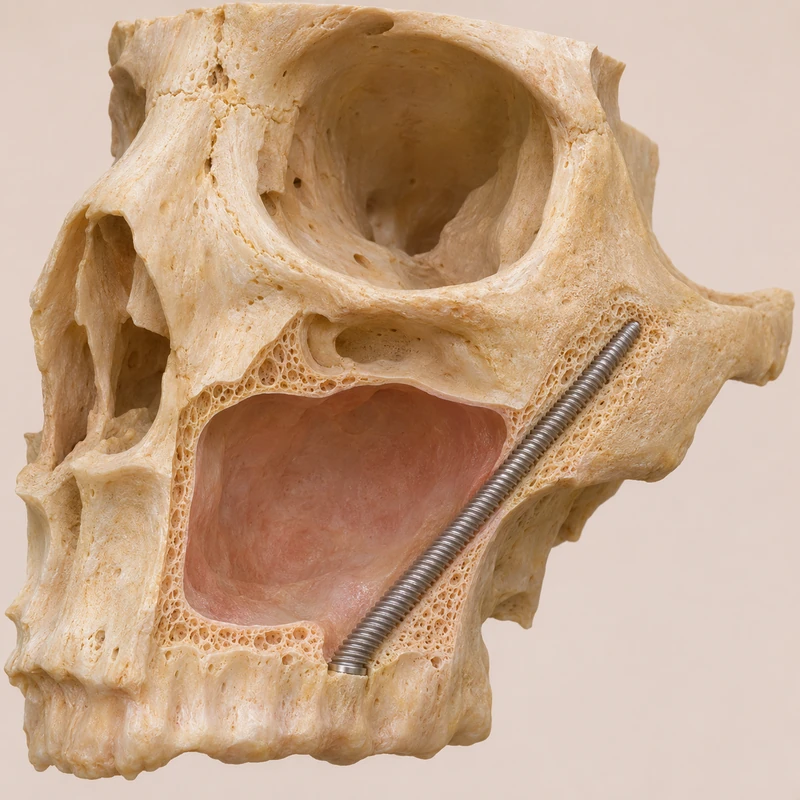
The implant spans the bone-deficient part of the upper jaw and gains support in the cheekbone. The prosthetic connection lies in the mouth.
The maxillary sinus lies close to the planned implant path. Its position and health form part of the assessment.
The design of the prosthesis and access for cleaning also matter. Symptoms involving the sinus need attention.
This approach concerns the upper jaw.
Mainly in severe bone loss or selected defects.
In particular the maxillary sinus next to the cheekbone.
Three steps. No audio.
Each scene can also be selected manually.

Silent film with English on-screen text and simplified teaching images.
A sinus lift creates space for bone augmentation at the sinus floor. A zygomatic implant uses a different site of bony support.
The location and extent of bone loss and the planned prosthesis guide the choice. Augmentation, other implant designs and removable solutions may also be discussed.
The trajectory involves the upper jaw, sinus and cheekbone close to the orbit. Three-dimensional imaging supports individual planning.
Persistent one-sided facial pressure, pus-like nasal discharge or pain warrant contact with the treating team. Maxillary sinusitis is a recognised complication.
Before a specialist opinion
What alternatives suit my bone volume, and who would provide long-term aftercare?
Discuss the initial findings and suitable specialist assessment.
Choose an appointmentAppointment selection at DoctolibThe location of the implant tip describes the bony anchorage. The position of the connection in the mouth helps determine prosthesis design and access for cleaning.
Editorial research: . General information, not an individual diagnosis or treatment recommendation. Teaching illustrations are simplified and do not depict a patient case.
If you turn this on, this website stores which guides you open, separately from advertising preferences. The markers expire after a fixed 30-day period from activation. The list is not sent to us by this feature. You can turn it off here and delete the markers.
Other people using the same browser profile can also see the markers. German and English versions share one marker. Expired entries are removed the next time you open a page with this feature; deleting browser data may remove them earlier. “Viewed” means opened, not read or completed.