Can the other side be injured too?
Force may reach both joints.

A condylar fracture is a break in the joint-bearing process of the lower jaw. An impact on the chin can transmit force to one or both joints. A changed bite, pain in front of the ear or limited opening after injury warrants prompt assessment.
For training & practice ↓
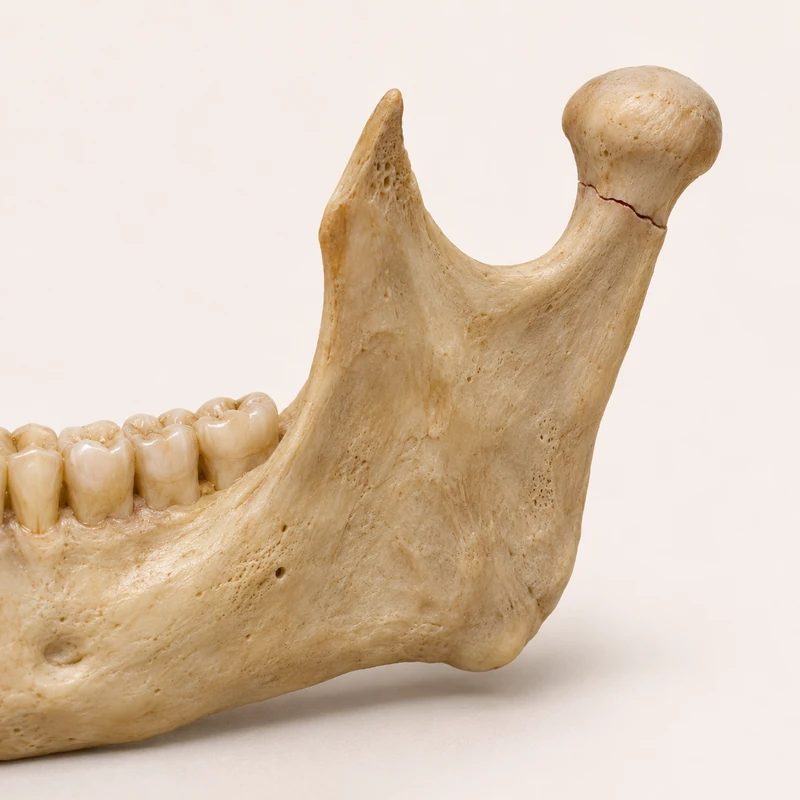
On both sides the lower jaw rises towards the joint head in front of the ear. Fractures can involve the head, neck or base of the condylar process.
Tooth contacts may feel different after a fracture. The team checks the previous bite, pain, dental injuries and mouth opening.
A visible chin wound may be some distance from the fracture. Examination and appropriate imaging establish which areas are affected.
Force may reach both joints.
Avoid forceful movements and seek assessment.
This depends on the site, displacement, bite, age and associated injuries.
Three steps. No audio.
Each scene can also be selected manually.

Silent film with English on-screen text and simplified teaching images.
In dislocation the joint head is out of position. A fracture involves a break in bone. Examination also considers combined injury.
Individual symptoms are nonspecific. Specialist assessment and imaging establish the diagnosis.
Mention impact direction, previous bite, any loss of consciousness or visual problems and changes in movement.
Bite and movement need review during healing. The team advises when and how to move or load the jaw.
For the trauma assessment
Have both condylar processes and the rest of the jaw been assessed?
Seek same-day emergency or maxillofacial assessment for a changed bite or limited opening after injury.
Call the practice · 0221 669 401 80Telephone contactThe site of impact need not be the site of the fracture.
Editorial research: . General information, not an individual diagnosis or treatment recommendation. Teaching illustrations are simplified and do not depict a patient case.
If you turn this on, this website stores which guides you open, separately from advertising preferences. The markers expire after a fixed 30-day period from activation. The list is not sent to us by this feature. You can turn it off here and delete the markers.
Other people using the same browser profile can also see the markers. German and English versions share one marker. Expired entries are removed the next time you open a page with this feature; deleting browser data may remove them earlier. “Viewed” means opened, not read or completed.