Where is the pain often felt?
Commonly in one or both temples. The location alone does not identify the cause.

Pain in the temple can arise from the chewing muscles or jaw joints. A temporomandibular disorder (TMD) is one possible cause if chewing or clenching changes your familiar headache and an examination of the jaw reproduces it.
For training & practice ↓
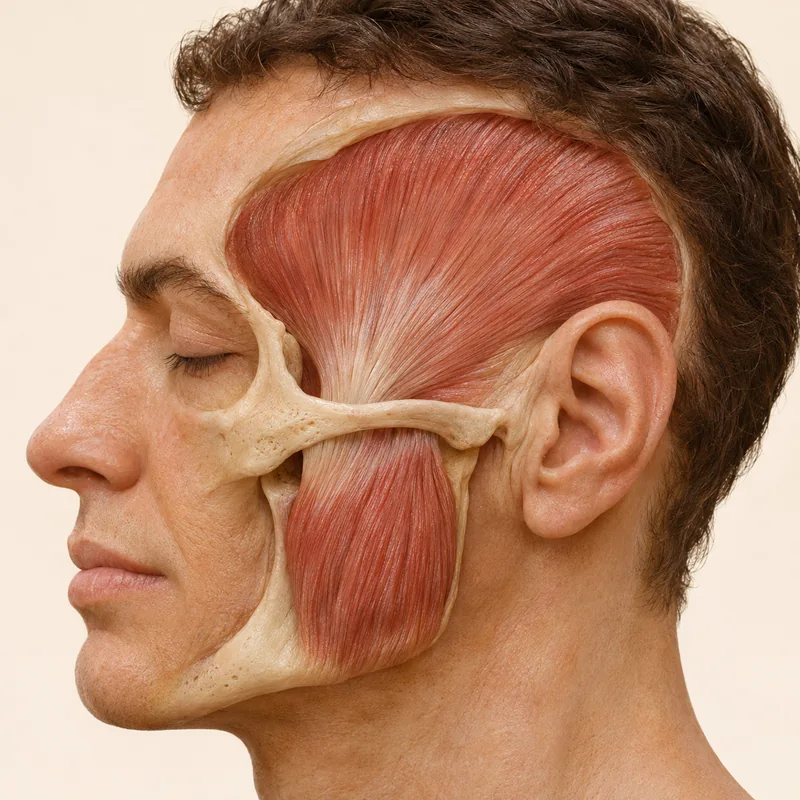
The temporalis is one of the muscles used in chewing. It contracts when the teeth come together. It helps the examiner to know whether your usual headache occurs here or somewhere else.
The examination includes jaw movements and careful palpation. An important finding is whether they reproduce the headache you usually experience. A spot that merely feels tender provides less information.
Record where the pain occurs, how long it lasts and what comes with it. Note whether chewing, yawning or clenching changes it. Days when the headache seems unrelated to the jaw are useful too.
Commonly in one or both temples. The location alone does not identify the cause.
They may check whether jaw movements or palpation of the temporalis reproduce your usual headache.
If recurring headaches occur with jaw symptoms and change when you chew or clench.
Three steps. No audio.
Each scene can also be selected manually.

Silent film with English on-screen text and simplified teaching images.
Temple pain occurs in several conditions. A new or substantially different headache deserves its own assessment, even if you already have TMD.
No. A sound alone does not explain a headache. The history, the effect of movement and the examination findings must fit together.
Yes. More than one type of headache can occur. Mention nausea, sensitivity to light, visual symptoms or a previous migraine diagnosis. These details help the medical and dental assessment.
In Germany call 112 for a sudden, extremely severe headache or a new headache with weakness, difficulty speaking or reduced consciousness. Do not wait for a dental appointment in that situation.
A question to bring along
Which of my symptoms can be reproduced during the jaw examination, and which need a separate medical assessment?
Arrange an assessment for recurring symptoms when chewing or clenching, and bring your notes.
Choose an appointmentAppointment selection at DoctolibA painful jaw finding and a headache may occur together. Attributing one to the other requires a consistent clinical picture.
Editorial research: . General information, not an individual diagnosis or treatment recommendation. Teaching illustrations are simplified and do not depict a patient case.
If you turn this on, this website stores which guides you open, separately from advertising preferences. The markers expire after a fixed 30-day period from activation. The list is not sent to us by this feature. You can turn it off here and delete the markers.
Other people using the same browser profile can also see the markers. German and English versions share one marker. Expired entries are removed the next time you open a page with this feature; deleting browser data may remove them earlier. “Viewed” means opened, not read or completed.