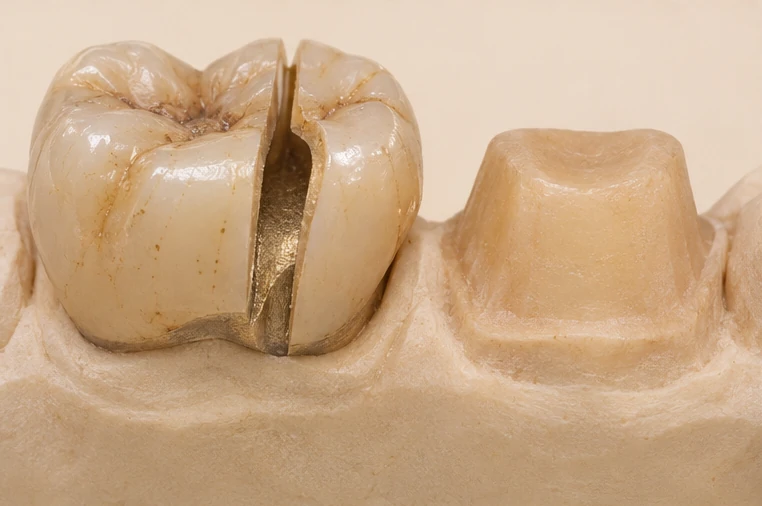
A sectioned crown
The slit illustrates one removal approach. The prepared tooth and old crown are separate structures.

The dentist separates the crown from the tooth or core beneath it. A firmly attached crown may have to be sectioned. Whether the underlying tooth can be retained is a separate decision based on its condition.
For training & practice ↓
The slit illustrates one removal approach. The prepared tooth and old crown are separate structures.
The prepared surface lies beneath the crown. Removal can allow closer inspection.
A post and core may lie beneath a crown and affect removal planning.
The slit illustrates one removal approach. The prepared tooth and old crown are separate structures.
The prepared surface lies beneath the crown. Removal can allow closer inspection.
A post and core may lie beneath a crown and affect removal planning.
The slit illustrates one removal approach. The prepared tooth and old crown are separate structures.
The prepared surface lies beneath the crown. Removal can allow closer inspection.
A post and core may lie beneath a crown and affect removal planning.
Three steps. No audio.
Each scene can also be selected manually.

Silent film with English on-screen text and simplified teaching images.
A defective margin, decay beneath the crown or a damaged core can limit access. The team considers what can be treated through or around the crown and when removal is appropriate.
A defective margin, decay beneath the crown or a damaged core can limit access. The team considers what can be treated through or around the crown and when removal is appropriate.
Some crowns can be removed intact. Reuse also depends on whether they still fit the tooth after any necessary treatment. A crown that has been cut apart usually needs to be replaced.
Arrange a prompt check and avoid heavy chewing on it. Take the crown with you if it comes off. Do not use household glue.
A question to ask
Can the old crown be removed intact, and what takes priority for the tooth underneath?
Choose an appointment to discuss your own tooth or restoration.
Choose an appointmentAppointment selection at DoctolibAssess retention, the crown material, any post and core, and the remaining tooth structure individually. The appearance of a margin alone cannot show the entire condition beneath a crown.
Editorial research: . General information, not an individual diagnosis or treatment recommendation. Teaching illustrations are simplified and do not depict a patient case.
If you turn this on, this website stores which guides you open, separately from advertising preferences. The markers expire after a fixed 30-day period from activation. The list is not sent to us by this feature. You can turn it off here and delete the markers.
Other people using the same browser profile can also see the markers. German and English versions share one marker. Expired entries are removed the next time you open a page with this feature; deleting browser data may remove them earlier. “Viewed” means opened, not read or completed.