How can I start when the toothbrush is left unused?
Prompt one step at a time and allow the person to respond.

Mouth care in dementia combines familiar routines with the support a person needs at that moment. Changes in speech or memory can make dental pain harder to recognise.
For training & practice ↓
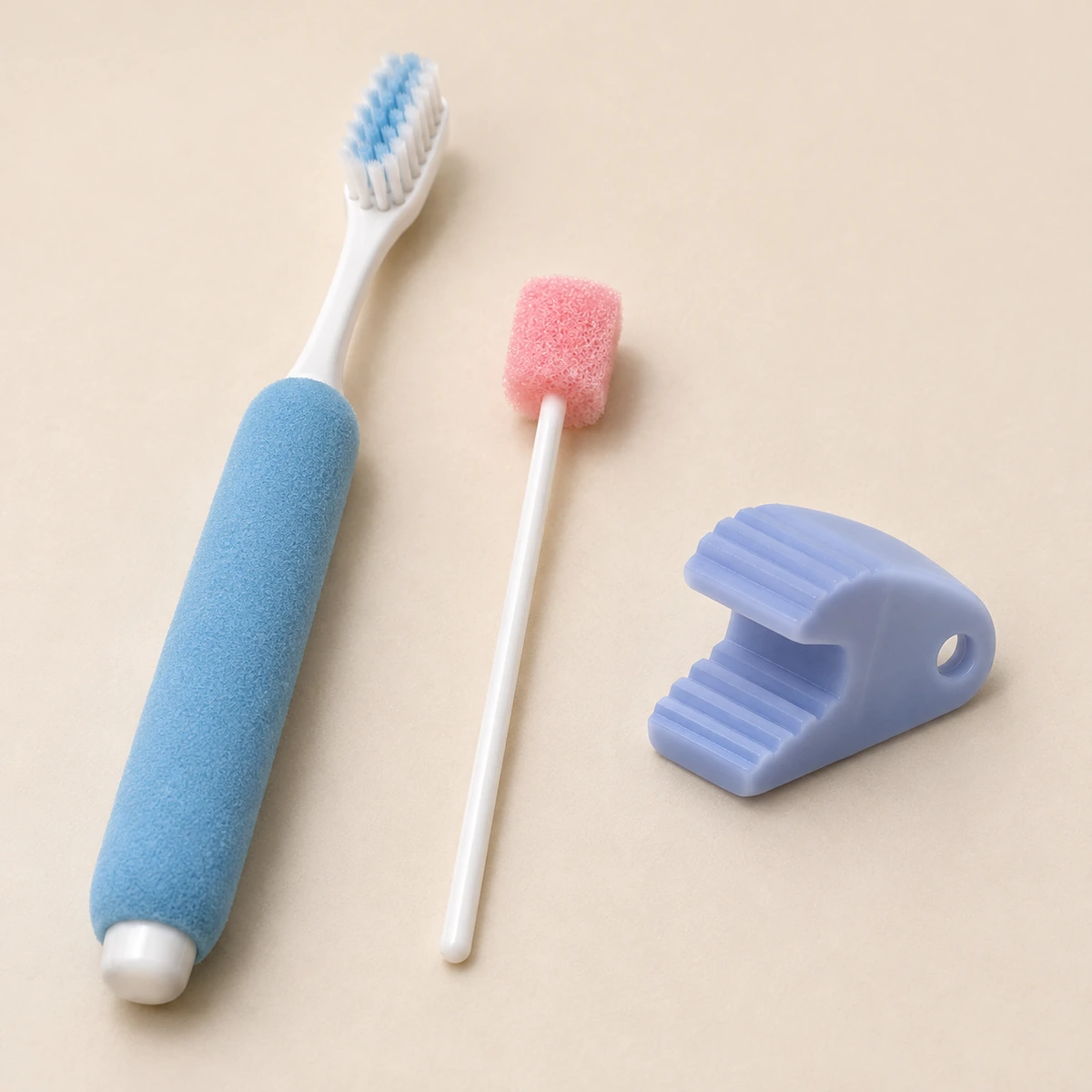
Set out familiar items and demonstrate one action, such as picking up the brush. Wait for a response and allow time for any step the person can do themselves.
Pause and consider whether something hurts, startles or feels uncomfortable. It may help to try again at a quieter moment with someone familiar.
Watch for chewing on one side, suddenly refusing a denture or repeatedly touching a cheek. These changes can have several causes and are worth investigating.
Prompt one step at a time and allow the person to respond.
Pause first and consider the reason for distress.
New changes in eating or denture use deserve attention.
Three steps. No audio.
Each scene can also be selected manually.

Silent educational film with German on-screen text and simplified teaching images. Not a patient case or a promised treatment outcome. The full English explanation is available as text.
When communication is difficult, behaviour or facial expression may reveal more than words. Seek a dental assessment for persistent changes.
Set out familiar items and demonstrate one action, such as picking up the brush. Wait for a response and allow time for any step the person can do themselves.
Pause and consider whether something hurts, startles or feels uncomfortable. It may help to try again at a quieter moment with someone familiar.
Watch for chewing on one side, suddenly refusing a denture or repeatedly touching a cheek. These changes can have several causes and are worth investigating.
Describe specific changes and when they started. Bring any removable denture and explain what support works well at home.
When communication is difficult, behaviour or facial expression may reveal more than words. Seek a dental assessment for persistent changes.
A question you could ask
What level of help fits what the person can still do independently?
Tell the dental team if eating or familiar mouth care suddenly becomes difficult.
Discuss at a dental appointmentAppointment selection at DoctolibWhen communication is difficult, behaviour or facial expression may reveal more than words. Seek a dental assessment for persistent changes.
Editorial research: . General information, not an individual diagnosis or treatment recommendation. Teaching illustrations are simplified and do not depict a patient case.
If you turn this on, this website stores which guides you open, separately from advertising preferences. The markers expire after a fixed 30-day period from activation. The list is not sent to us by this feature. You can turn it off here and delete the markers.
Other people using the same browser profile can also see the markers. German and English versions share one marker. Expired entries are removed the next time you open a page with this feature; deleting browser data may remove them earlier. “Viewed” means opened, not read or completed.