Only muscle strength?
No; posture and coordination also matter.

Orofacial myofunctional therapy is supervised treatment of atypical posture and movement patterns involving the tongue, lips and other oral muscles. Goals may include a suitable resting posture, functional lip closure or a different swallowing pattern. Treatment follows a functional assessment and may involve dental, orthodontic, speech and language, and ENT professionals. It is not a general replacement for braces or sleep apnoea treatment.
For training & practice ↓
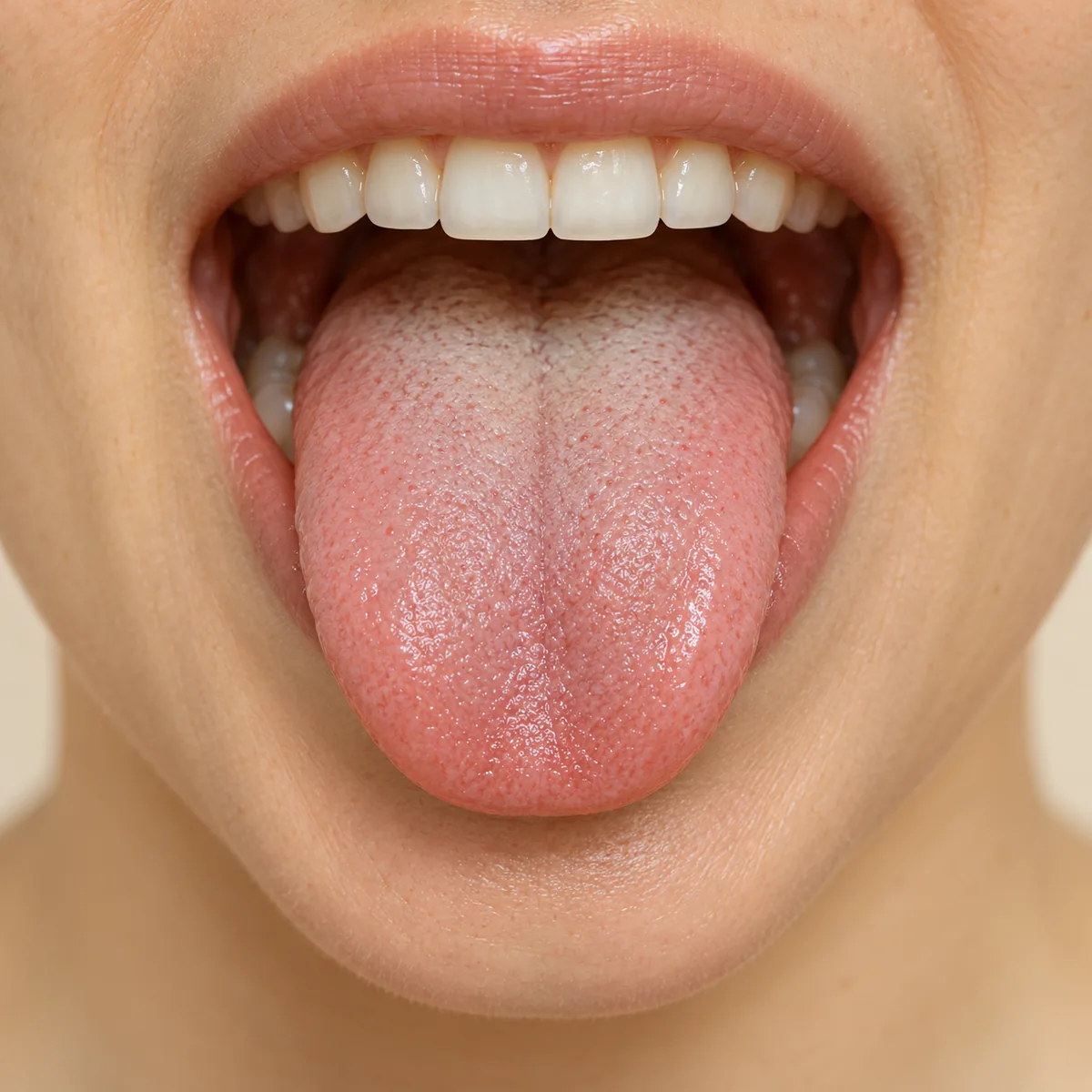
Assessment may cover tongue posture, lip closure and swallowing. A photograph or one isolated tongue movement cannot reliably establish a need for treatment.
Mouth breathing can be related to nasal obstruction. Adequate airflow needs assessment; exercises alone do not remove an anatomical or inflammatory blockage.
Exercises are chosen for the task and the person’s ability to follow instructions. Progress is judged against the agreed function, rather than promises of a different facial shape.
No; posture and coordination also matter.
It does not replace medical assessment and treatment.
Yes, with reviewable functional goals.
Three steps. No audio.
Each scene can also be selected manually.

Silent educational film with German on-screen text and simplified teaching images. Not a patient case or a promised treatment outcome. The full English explanation is available as text.
Treatment is not just about stronger muscles. Posture, movement patterns, coordination and their use in daily life may matter more than maximum force.
No. Oral function and tooth position may interact, but they are not the same thing. Whether orthodontic treatment is also needed requires a separate assessment.
No. Snoring and suspected breathing pauses need appropriate medical assessment. Exercises do not replace diagnosis or prescribed sleep apnoea treatment.
No. Goals, developmental stage, self-awareness and ability to participate shape treatment. A generic online programme may not address the actual problem.
Assessment may be appropriate at different ages. In very young children, limited self-awareness and ability to follow instructions can make structured practice unsuitable. Adults also need a specific functional goal rather than a generic tongue routine.
You can bring this question to your appointment:
Which function is actually affected, and which professionals should help assess its causes?
An individual assessment can clarify the findings and whether referral is needed.
Arrange an assessmentAppointment selection at DoctolibTreatment is not just about stronger muscles. Posture, movement patterns, coordination and their use in daily life may matter more than maximum force.
Editorial research: . General information, not an individual diagnosis or treatment recommendation. Teaching illustrations are simplified and do not depict a patient case.
If you turn this on, this website stores which guides you open, separately from advertising preferences. The markers expire after a fixed 30-day period from activation. The list is not sent to us by this feature. You can turn it off here and delete the markers.
Other people using the same browser profile can also see the markers. German and English versions share one marker. Expired entries are removed the next time you open a page with this feature; deleting browser data may remove them earlier. “Viewed” means opened, not read or completed.