Which structures contribute?
The tongue, lips and cheek muscles all play a part.

The neutral zone is the functional space where forces from the tongue are broadly balanced by the lips and cheeks during movement. Recording it can guide the position of artificial teeth and the contours of the outer surfaces of a lower denture.
For training & practice ↓
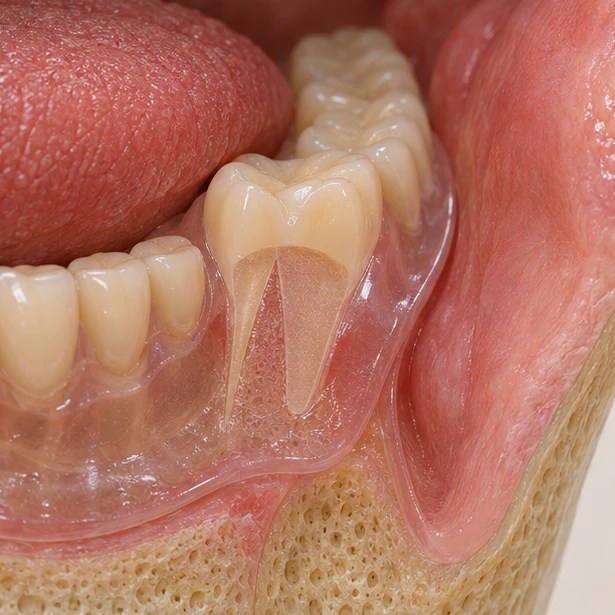
The tongue can exert pressure outwards, while the lips and cheeks act from outside. The space changes as a person speaks and swallows.
In a functional record, selected oral movements shape a mouldable material on a base. This records the space available in that person’s mouth.
The tooth arrangement and polished denture surfaces can follow the recorded space. Tissue support, bite and border shape still matter.
The tongue, lips and cheek muscles all play a part.
No. Stability has several contributing factors.
For example, whether the denture moves during swallowing or tongue movement.
Three steps. No audio.
Each scene can also be selected manually.

Silent film with English on-screen text and simplified teaching images.
Describes the vertical relationship of the jaws.
Its position depends on the soft tissues as they move. The centre of the bony ridge need not coincide with the most suitable functional space.
When the ridge is severely resorbed there is less bony support. Tooth position and the contours of the outer surfaces may then be especially relevant. Other causes of instability also need assessing.
A small randomised crossover trial studied twelve people with no teeth and severely resorbed ridges. It examined digitally fabricated lower dentures, which limits generalisation.
A question to bring along
Could tooth position contribute to movement of my lower denture?
You can show the dentist how the denture moves when you speak or swallow.
Choose a dental appointmentAppointment selection at DoctolibA static impression and a functional neutral-zone record capture different information.
Editorial research: . General information, not an individual diagnosis or treatment recommendation. Teaching illustrations are simplified and do not depict a patient case.
If you turn this on, this website stores which guides you open, separately from advertising preferences. The markers expire after a fixed 30-day period from activation. The list is not sent to us by this feature. You can turn it off here and delete the markers.
Other people using the same browser profile can also see the markers. German and English versions share one marker. Expired entries are removed the next time you open a page with this feature; deleting browser data may remove them earlier. “Viewed” means opened, not read or completed.