What matters before deciding?
The clinician checks access for cleaning and whether the tooth is symptomatic.

In selected decayed primary teeth, the cavity is made accessible so it can be cleaned daily. Instruction, fluoride and regular clinical reviews form part of this approach.
For training & practice ↓
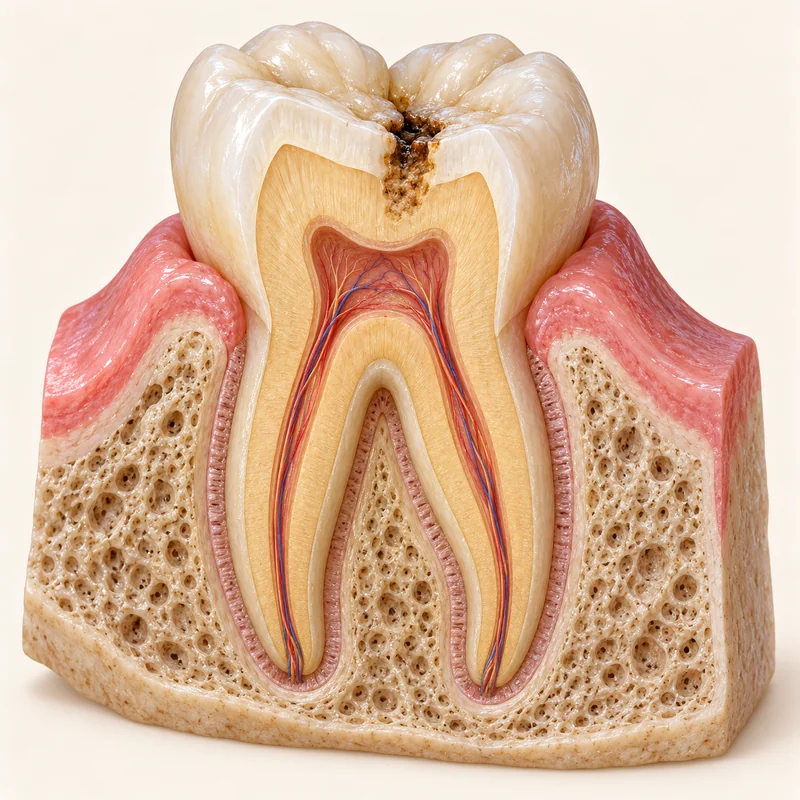
The clinician assesses depth, accessibility and symptoms. Signs of pulp disease influence the decision.
The family practises reaching the affected surface during daily brushing. If access is limited, the clinician may carefully open the cavity for cleaning.
At review the team checks whether the cavity stays clean, whether the lesion is arresting and whether new symptoms suggest a different treatment.
The clinician checks access for cleaning and whether the tooth is symptomatic.
Yes. Daily cleaning access is part of the approach.
Yes. Progression and access for cleaning are checked regularly.
Three steps. No audio.
Each scene can also be selected manually.

Silent film with English on-screen text and simplified teaching images.
Cleaning and follow-up are actively supervised. Waiting for the tooth to fall out is not cavity control.
No. This approach requires case selection, a cleanable lesion and scheduled reviews. Pain or swelling needs examination.
The Hall technique seals the lesion under a preformed metal crown. In cavity control the surface remains accessible to a brush.
In a randomised study of cavities involving the contact surface of primary molars the Hall technique performed better. Failures also occurred with non-restorative care. Case selection matters.
A question to bring along
Could you show us how to clean this surface and tell us when you will review it?
Contact the dental team promptly for spontaneous pain, new swelling or fever.
Choose an appointmentAppointment selection at DoctolibFindings for selected primary molars do not apply to every painful or extensively damaged baby tooth.
Editorial research: . General information, not an individual diagnosis or treatment recommendation. Teaching illustrations are simplified and do not depict a patient case.
If you turn this on, this website stores which guides you open, separately from advertising preferences. The markers expire after a fixed 30-day period from activation. The list is not sent to us by this feature. You can turn it off here and delete the markers.
Other people using the same browser profile can also see the markers. German and English versions share one marker. Expired entries are removed the next time you open a page with this feature; deleting browser data may remove them earlier. “Viewed” means opened, not read or completed.