Why is the decay left underneath?
An effective seal aims to arrest the lesion.

The Hall technique seals a suitable decayed primary molar beneath a preformed metal crown. The tooth is not drilled to shape and the decayed tissue stays beneath the crown. The seal cuts off the lesion's access to nutrients from the mouth.
For training & practice ↓
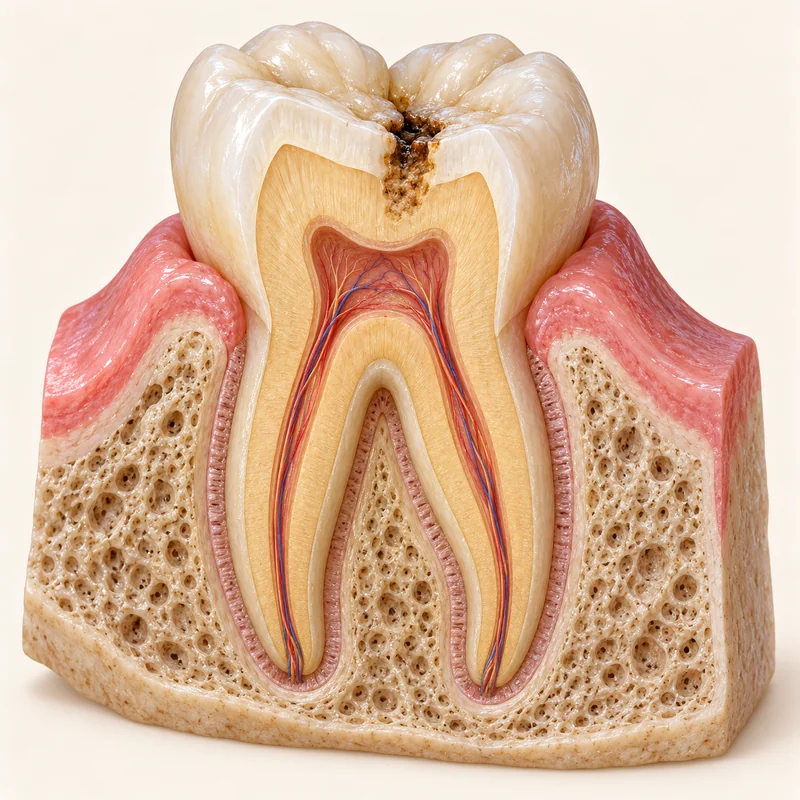
The team assesses the tooth and surrounding tissues first. Findings suggesting irreversible pulpitis or an abscess rule out a Hall crown for that tooth.
A preformed crown of the correct size is seated over the molar with cement. Tight contacts may require small separators beforehand. Local anaesthetic is not usually part of the technique.
The bite may feel slightly high at first and often settles. Parents should call if discomfort persists, the crown loosens or swelling develops.
An effective seal aims to arrest the lesion.
It is intended for selected primary molars.
The usual preformed crown is silver-coloured.
Three steps. No audio.
Each scene can also be selected manually.

Silent educational film with German on-screen text and simplified teaching images. Not a patient case or a promised treatment outcome. The full English explanation is available as text.
A conventionally fitted steel crown may require tooth preparation. Hall refers to sealing without tooth preparation or prior caries removal.
An effective seal aims to arrest the lesion. This depends on correct case selection and a well-fitting crown.
It is intended for selected primary molars. An abscess or signs of irreversible pulpitis require a different assessment and treatment.
The usual preformed crown is silver-coloured. Its appearance is something families can discuss before treatment.
Yes. The gum margin, adjacent teeth and the rest of the dentition still need cleaning, prevention and reviews.
A question you could ask
Which findings make this crown suitable or unsuitable for my child?
Which findings make this crown suitable or unsuitable for my child?
Arrange a dental consultationAppointment selection at DoctolibA conventionally fitted steel crown may require tooth preparation. Hall refers to sealing without tooth preparation or prior caries removal.
Editorial research: . General information, not an individual diagnosis or treatment recommendation. Teaching illustrations are simplified and do not depict a patient case.
If you turn this on, this website stores which guides you open, separately from advertising preferences. The markers expire after a fixed 30-day period from activation. The list is not sent to us by this feature. You can turn it off here and delete the markers.
Other people using the same browser profile can also see the markers. German and English versions share one marker. Expired entries are removed the next time you open a page with this feature; deleting browser data may remove them earlier. “Viewed” means opened, not read or completed.