What does palatal indicate?
Facing the palate.

A palatal veneer is a thin bonded partial restoration on the palate-facing side of an upper tooth, usually an anterior tooth. It can replace lost internal contour and contacts, for example after substantial erosive wear. Direct or indirect construction depends on the defect and the overall bite.
For training & practice ↓
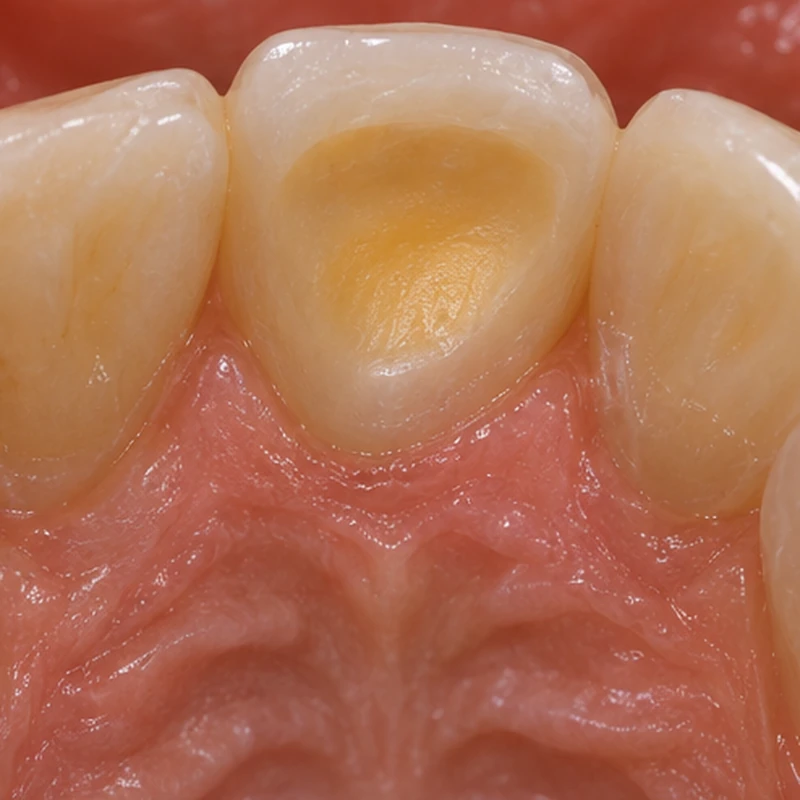
A hollow on the palatal surface may alter contour and contact with the lower incisor. The causes of wear should be assessed before restoration.
The model shows a partial restoration beside the palatal surface. Planning considers missing tissue, the available bonding surface and room for material.
A conventional facial veneer lies on the lip-facing surface and serves a different purpose. Any need to restore that surface as well is assessed separately.
Facing the palate.
Addressing the causes of wear.
Baseline conditions and loads vary.
Three steps. No audio.
Each scene can also be selected manually.

Silent film with English on-screen text and simplified teaching images.
A full crown surrounds the clinical crown. A palatal build-up covers the surface area needing restoration.
No. One prospective clinical study used indirect composite on the palatal surfaces and ceramic veneers on the facial surfaces. The name primarily identifies location.
Ongoing acid exposure or unfavourable contacts can still cause problems. Prevention and review are part of planning.
Duration depends in part on bonding tissue, loading and subsequent wear. A small clinical study with several years of follow-up cannot predict an individual lifespan.
A question to bring along
Which contact surface is the restoration intended to rebuild?
When front teeth have shortened or become thin, assessment can help identify which surfaces need protection or restoration.
Choose an appointmentAppointment selection at DoctolibWear of the inner surface may alter function even when the tooth looks unremarkable from the front.
Editorial research: . General information, not an individual diagnosis or treatment recommendation. Teaching illustrations are simplified and do not depict a patient case.
If you turn this on, this website stores which guides you open, separately from advertising preferences. The markers expire after a fixed 30-day period from activation. The list is not sent to us by this feature. You can turn it off here and delete the markers.
Other people using the same browser profile can also see the markers. German and English versions share one marker. Expired entries are removed the next time you open a page with this feature; deleting browser data may remove them earlier. “Viewed” means opened, not read or completed.