What does phenotype describe?
Features of the gingiva and outer bone plate.

The periodontal phenotype describes tissue features around a tooth: gingival thickness, the width of keratinised gingiva and the thickness of the outer bone plate. It can vary between sites and change over time.
For training & practice ↓
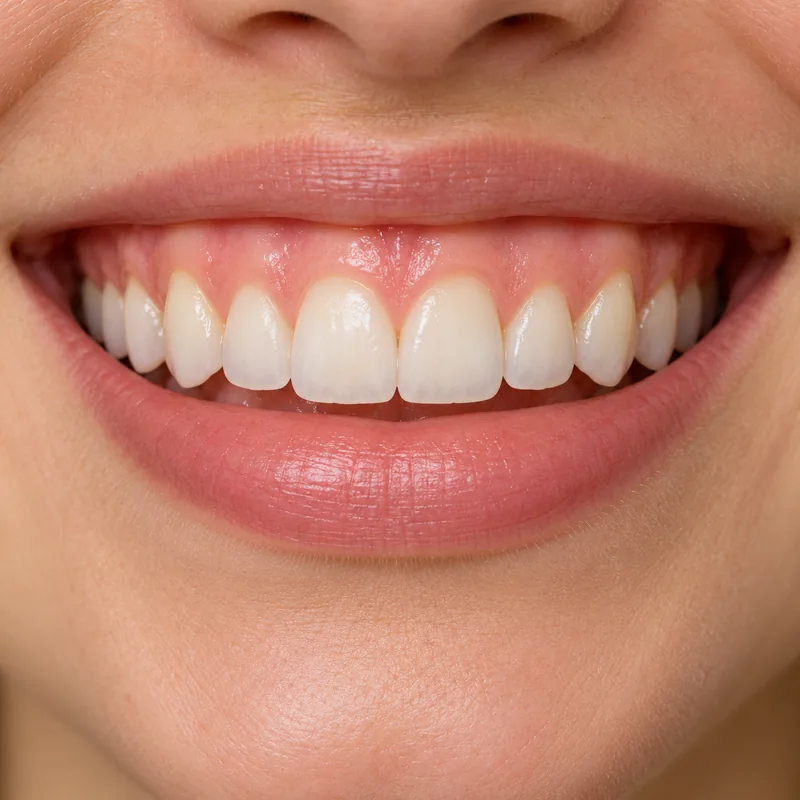
The gingival and bone components belong together. A photograph does not reveal all these dimensions. Visible colour does not reliably classify tissue thickness either.
A thin phenotype is associated with a higher risk of gingival recession. It does not automatically mean disease or inevitable future recession. Cleaning, findings and planned treatment are considered together.
Tissue characteristics may matter for restorations, orthodontic tooth movement or gum-margin concerns. Classification alone does not justify surgery or three-dimensional X-ray imaging.
Features of the gingiva and outer bone plate.
No, it can vary between sites.
No, the clinical circumstances are decisive.
Three steps. No audio.
Each scene can also be selected manually.

Silent educational film with German on-screen text and simplified teaching images. Not a patient case or a promised treatment outcome. The full English explanation is available as text.
Gingival phenotype includes tissue thickness and keratinised width. Periodontal phenotype also includes the outer bone plate.
Biotype was often used in the past. Phenotype emphasises that visible and measurable characteristics reflect several influences and may change.
The clinician examines gingival thickness, width and other clinical features. This does not automatically provide a complete assessment of the bone component.
Not routinely for phenotype assessment alone. The consensus does not recommend CBCT solely for this purpose; imaging needs its own justified indication.
No. Treatment need depends on symptoms, recession, cleaning and planned procedures. Thin tissue alone is not an indication for surgery.
This is not advisable. Do not insert a probe or other objects beneath the gum. Have specific symptoms and tissue characteristics assessed.
You can bring this question to your appointment:
What do my tissue characteristics mean for the specific treatment being planned?
Discuss which cleaning approach fits your findings.
Discuss dental careAppointment selection at DoctolibGingival phenotype includes tissue thickness and keratinised width. Periodontal phenotype also includes the outer bone plate.
Editorial research: . General information, not an individual diagnosis or treatment recommendation. Teaching illustrations are simplified and do not depict a patient case.
If you turn this on, this website stores which guides you open, separately from advertising preferences. The markers expire after a fixed 30-day period from activation. The list is not sent to us by this feature. You can turn it off here and delete the markers.
Other people using the same browser profile can also see the markers. German and English versions share one marker. Expired entries are removed the next time you open a page with this feature; deleting browser data may remove them earlier. “Viewed” means opened, not read or completed.