What can cause injury during brushing?
Unsuitable technique and excessive mechanical loading.

Toothbrushing trauma means mechanical injury from unsuitable or overly forceful cleaning. It can affect gums or tooth surfaces. An exposed tooth neck alone, however, does not establish brushing as the cause.
For training & practice ↓
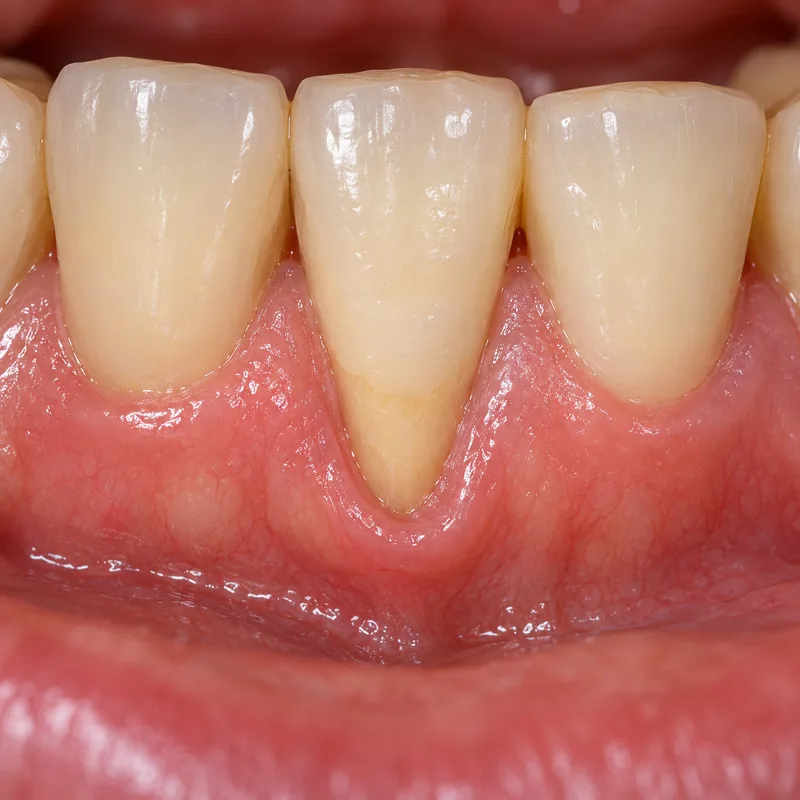
A sore area after vigorous scrubbing may suggest mechanical irritation. Bleeding, sensitivity or recession can have other causes too. Examination helps interpret the findings.
Soft bristles and light pressure help avoid injury. Ask for a technique demonstration. Stopping all cleaning because of bleeding can leave plaque in place.
Tooth wear is not always caused by the brush alone. Acids, tooth position, tissue characteristics and other factors may contribute. An adapted plan addresses the actual causes.
Unsuitable technique and excessive mechanical loading.
Soft bristles and light pressure help avoid injury.
No, several causes are possible.
Three steps. No audio.
Each scene can also be selected manually.

Silent educational film with German on-screen text and simplified teaching images. Not a patient case or a promised treatment outcome. The full English explanation is available as text.
Bleeding gums do not prove toothbrushing trauma. Plaque-related inflammation can cause similar signs and needs appropriate care.
No. Recession has different causes. Studies do not consistently establish a brushing association, so a single cause should not be assumed too quickly.
No. Clean gently and have persistent or recurrent bleeding assessed. Inflammation and mechanical injury need to be distinguished.
Not automatically. Manual and electric brushes can both clean effectively. Suitable bristles, handling and pressure still matter.
Gentler technique can reduce further stress but does not reliably restore lost tissue. Findings determine whether additional measures are needed.
For persistent sores, pain, recurrent bleeding, increasing recession or sensitive tooth necks. Have new cleaning habits and aids assessed as well.
You can bring this question to your appointment:
Which causes fit my symptoms, and how should I adapt my brushing technique?
Discuss which cleaning approach fits your findings.
Discuss dental careAppointment selection at DoctolibBleeding gums do not prove toothbrushing trauma. Plaque-related inflammation can cause similar signs and needs appropriate care.
Editorial research: . General information, not an individual diagnosis or treatment recommendation. Teaching illustrations are simplified and do not depict a patient case.
If you turn this on, this website stores which guides you open, separately from advertising preferences. The markers expire after a fixed 30-day period from activation. The list is not sent to us by this feature. You can turn it off here and delete the markers.
Other people using the same browser profile can also see the markers. German and English versions share one marker. Expired entries are removed the next time you open a page with this feature; deleting browser data may remove them earlier. “Viewed” means opened, not read or completed.