What can be useful?
Previous records, where available.

Grading adds an estimate of progression to a periodontitis diagnosis. Grades A, B and C indicate slower, moderate or faster progression. Assessment uses longitudinal records where available, or indirect evidence, together with relevant risk modifiers.
For training & practice ↓
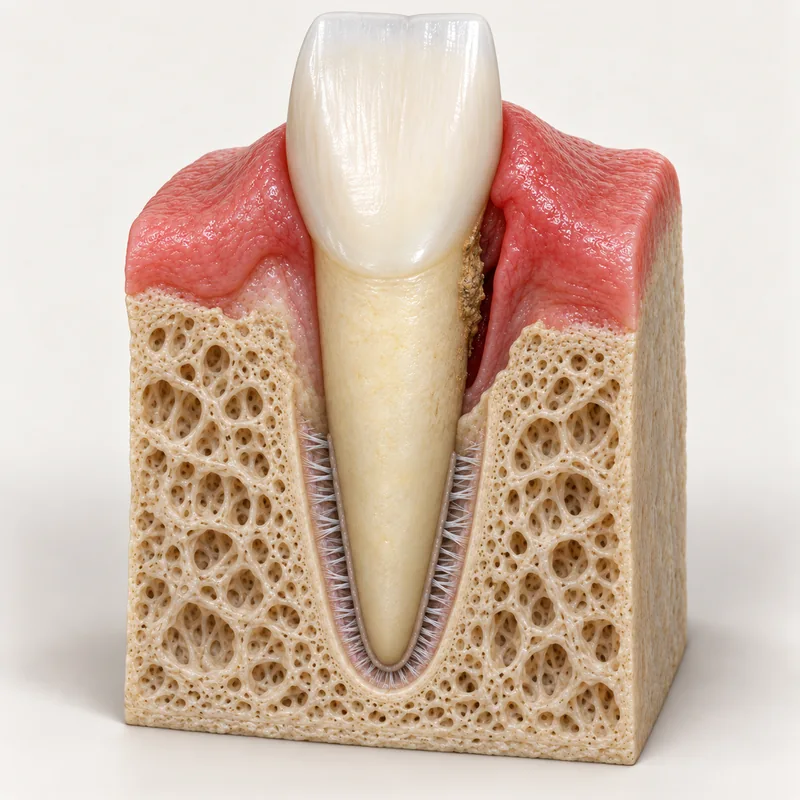
Earlier records may show changes in attachment or bone. A single photograph cannot measure the rate of progression.
Indirect information is used when comparison records are unavailable. Smoking and diabetic blood-glucose control can influence classification.
The estimate supports treatment and maintenance planning. It is not a certain forecast and can be reviewed when new information becomes available.
Previous records, where available.
Smoking, diabetes and relevant health changes.
Individual planning rather than a fixed prediction.
Three steps. No audio.
Each scene can also be selected manually.

Silent educational film with German on-screen text and simplified teaching images. Not a patient case or a promised treatment outcome. The full English explanation is available below.
Earlier records may show changes in attachment or bone. A single photograph cannot measure the rate of progression.
Indirect information is used when comparison records are unavailable. Smoking and diabetic blood-glucose control can influence classification.
The estimate supports treatment and maintenance planning. It is not a certain forecast and can be reviewed when new information becomes available.
Limited accumulated damage can coexist with faster progression. This is why stage and grade are recorded separately.
No. It is a clinical assessment, not a judgement of the person or their discipline.
No. Treatment and reviews still depend on the findings, even when progression appears slow.
No. Rate of progression and accumulated damage describe different dimensions.
Editorially suggested question to discuss with Dr Niusha Barahmand Pour:
Which longitudinal records are available, and which modifiable factors matter for me?
Your records can help explain what the grade means.
Discuss periodontal progressionAppointment selection at DoctolibLimited accumulated damage can coexist with faster progression. This is why stage and grade are recorded separately.
Editorial research: . General information, not an individual diagnosis or treatment recommendation. Teaching illustrations are simplified and do not depict a patient case.