When is it assigned?
After diagnostic assessment.

Staging assigns diagnosed periodontitis to stages I to IV. It describes accumulated tissue loss and complexity of care. It is not simply a pain scale or an automatic decision about individual teeth.
For training & practice ↓
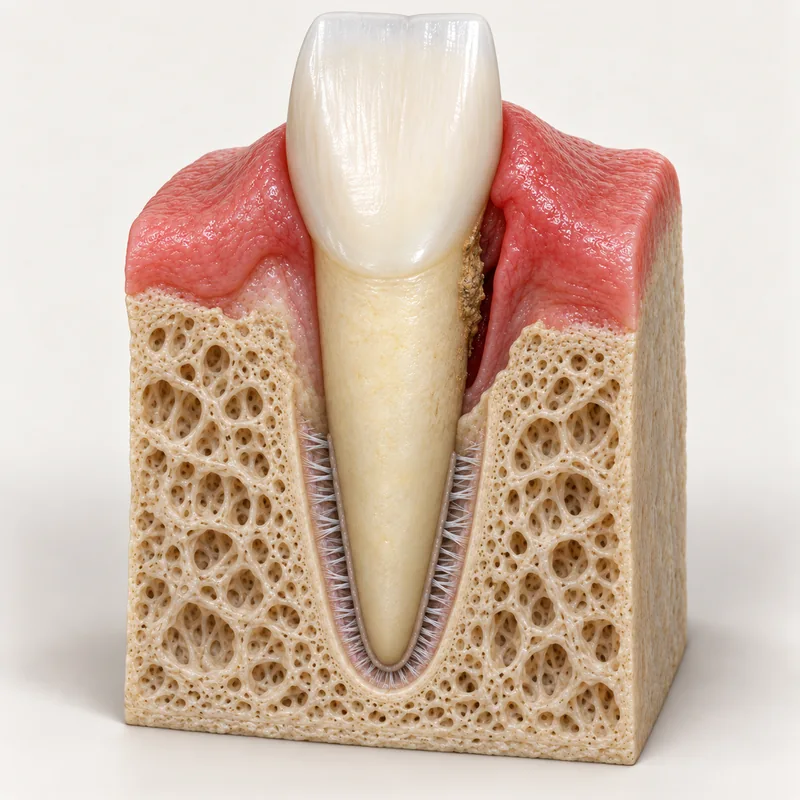
Findings include attachment and bone loss and teeth lost because of periodontitis. Other reasons for missing teeth must be distinguished.
Deep pockets, furcation involvement and functional problems can complicate care. Stage IV includes complex situations, such as impaired chewing function.
Stage informs treatment and maintenance. It is not simply reduced after successful treatment because the disease history remains relevant.
After diagnostic assessment.
Clinical findings and relevant radiographic information.
To plan treatment and long-term maintenance.
Three steps. No audio.
Each scene can also be selected manually.

Silent educational film with German on-screen text and simplified teaching images. Not a patient case or a promised treatment outcome. The full English explanation is available below.
Findings include attachment and bone loss and teeth lost because of periodontitis. Other reasons for missing teeth must be distinguished.
Deep pockets, furcation involvement and functional problems can complicate care. Stage IV includes complex situations, such as impaired chewing function.
Stage informs treatment and maintenance. It is not simply reduced after successful treatment because the disease history remains relevant.
Staging concerns accumulated damage and complexity of care. Grading adds an assessment of progression.
No. Stage describes the case, not a certain outcome for each tooth. Individual tooth prognosis requires separate assessment.
No. Stage concerns severity and complexity; grade estimates progression.
Previous tissue loss and complexity still influence ongoing care. Clinical improvement remains possible.
Editorially suggested question to discuss with Dr Niusha Barahmand Pour:
Which findings determine my stage, and how do they affect my care?
Understanding the stage can make the next steps clearer.
Discuss periodontal findingsAppointment selection at DoctolibStaging concerns accumulated damage and complexity of care. Grading adds an assessment of progression.
Editorial research: . General information, not an individual diagnosis or treatment recommendation. Teaching illustrations are simplified and do not depict a patient case.