Contagious?
No. This is an autoimmune disease.

Pemphigus vulgaris is a rare autoimmune disease in which connections between cells in the surface layer of skin and mucosa break down. Fragile oral blisters quickly rupture, leaving painful raw areas. The mouth may be affected before the skin. It is not contagious and needs specialist medical care.
For training & practice ↓
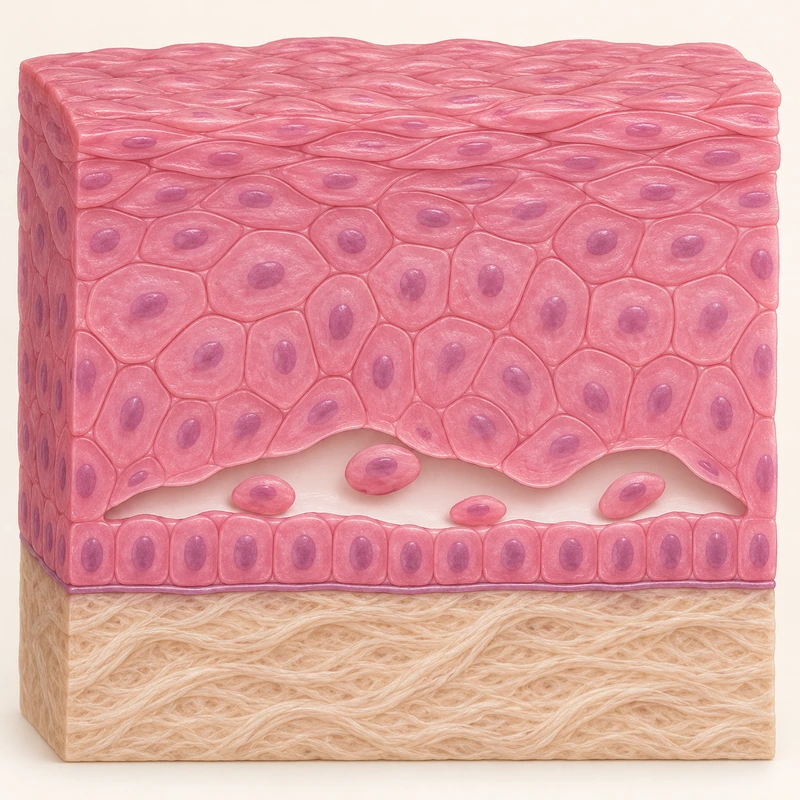
Misdirected antibodies target proteins that hold epithelial cells together. Loss of adhesion allows a fragile blister to form within the surface layer.
Oral blisters may have already burst by the time they are noticed. Tissue and antibody tests help distinguish pemphigus from other conditions. A photograph is not enough.
Specialist treatment controls the immune reaction. Gentle oral hygiene, adequate fluids and follow-up support care. Do not change prescribed medicines on your own.
No. This is an autoimmune disease.
No. Oral lesions may appear first.
Treatment needs specialist medical supervision.
Three steps. No audio.
Each scene can also be selected manually.

Silent educational film with German on-screen text and simplified teaching images. Not a patient case or a promised treatment outcome. The full English explanation is available as text.
These are different autoimmune blistering diseases. Pemphigus disrupts adhesion between epithelial cells. The names are not interchangeable; tissue and immune tests help establish the diagnosis.
No. Injuries, infections and other mucosal conditions can look similar. Persistent or recurrent lesions need assessment; tissue and blood tests may be needed.
No. Pemphigus vulgaris is not an infection. An open lesion can develop an additional infection, which is a separate issue for the care team to assess.
The disease can flare up. The team monitors disease activity, nutrition, oral health and treatment side effects. Complete recovery by a fixed date cannot be promised.
A soft toothbrush and non-irritating foods may make care easier. Avoid spicy, acidic or hard foods if they hurt. Discuss suitable oral care and pain relief individually.
You can bring this question to your appointment:
How will the diagnosis be confirmed, and how can dental and specialist care be coordinated?
Have acute symptoms assessed medically first. Subsequent dental care can address oral hygiene and avoiding irritation.
Discuss subsequent dental careAppointment selection at DoctolibThese are different autoimmune blistering diseases. Pemphigus disrupts adhesion between epithelial cells. The names are not interchangeable; tissue and immune tests help establish the diagnosis.
Editorial research: . General information, not an individual diagnosis or treatment recommendation. Teaching illustrations are simplified and do not depict a patient case.
If you turn this on, this website stores which guides you open, separately from advertising preferences. The markers expire after a fixed 30-day period from activation. The list is not sent to us by this feature. You can turn it off here and delete the markers.
Other people using the same browser profile can also see the markers. German and English versions share one marker. Expired entries are removed the next time you open a page with this feature; deleting browser data may remove them earlier. “Viewed” means opened, not read or completed.