Is PMMA a ceramic?
No. PMMA is a polymer; ceramic filler in another product does not make the two materials identical.

PMMA stands for polymethyl methacrylate, an acrylic polymer. Dental products based on it are used, for example, in denture resins and provisional restorations. Composition, manufacturing and permitted use differ between products.
For training & practice ↓
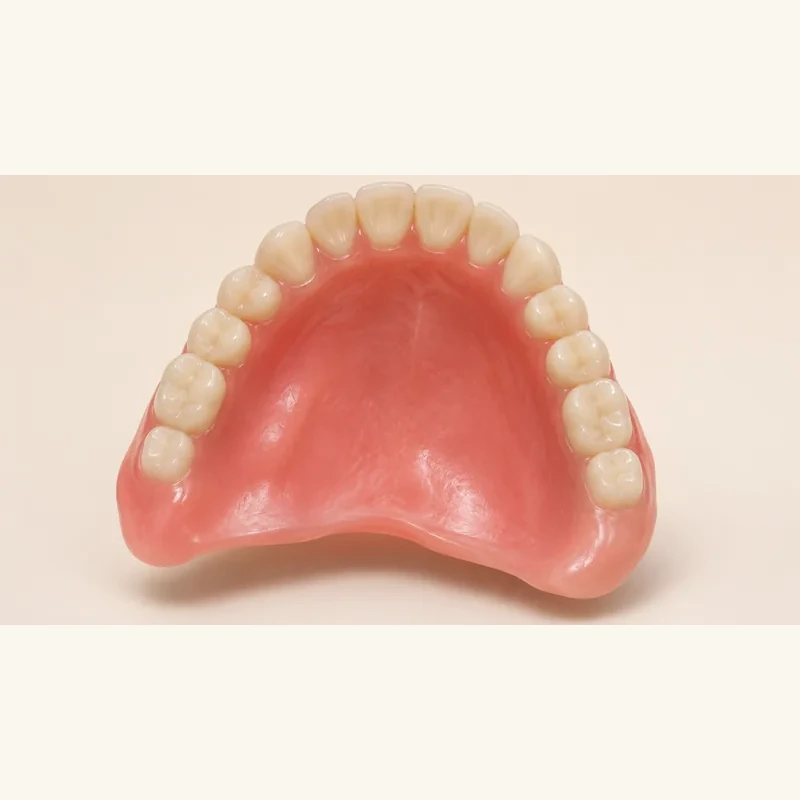
PMMA names a particular polymer material. Not every tooth-coloured resin or provisional restoration contains it.
Material may be processed or milled from industrially manufactured blanks. Instructions apply to the particular product.
Burning or redness does not prove PMMA allergy. Fit, oral tissues and possible material components need targeted assessment.
No. PMMA is a polymer; ceramic filler in another product does not make the two materials identical.
It means starting molecules that have not fully reacted. The finished polymer must not be equated with uncured monomer liquid.
No. A product intended for provisionals must not be planned as a permanent restoration merely because of its material name.
Three steps. No audio.
Each scene can also be selected manually.

Silent educational film with German on-screen text and simplified teaching images. Not a patient case or a promised treatment outcome. The full English explanation is available as text.
PMMA is the polymer. MMA is the starting molecule methyl methacrylate; they are not the same material state.
No. PMMA is a polymer; ceramic filler in another product does not make the two materials identical.
It means starting molecules that have not fully reacted. The finished polymer must not be equated with uncured monomer liquid.
No. A product intended for provisionals must not be planned as a permanent restoration merely because of its material name.
Reactions to dental acrylic products have been reported. The component involved requires professional assessment; a blanket allergy-free claim is unjustified.
Bring the product name, existing allergy findings and a description of symptoms. These do not automatically mean a restoration should be replaced.
You can raise this editorially suggested question during your consultation.
Which PMMA product is planned, and how long is the restoration intended to be used?
Which PMMA product is planned, and how long is the restoration intended to be used?
Request a consultationAppointment selection at DoctolibThe material class predicts neither a particular service period nor individual tolerance.
Editorial research: . General information, not an individual diagnosis or treatment recommendation. Teaching illustrations are simplified and do not depict a patient case.
If you turn this on, this website stores which guides you open, separately from advertising preferences. The markers expire after a fixed 30-day period from activation. The list is not sent to us by this feature. You can turn it off here and delete the markers.
Other people using the same browser profile can also see the markers. German and English versions share one marker. Expired entries are removed the next time you open a page with this feature; deleting browser data may remove them earlier. “Viewed” means opened, not read or completed.