What does “pressed ceramic” describe?
How the restoration was shaped.

Pressed ceramic restorations are shaped by heat pressing. A laboratory pattern is invested in a refractory material. After the pattern burns out, heated ceramic is pressed into the resulting mould cavity.
For training & practice ↓
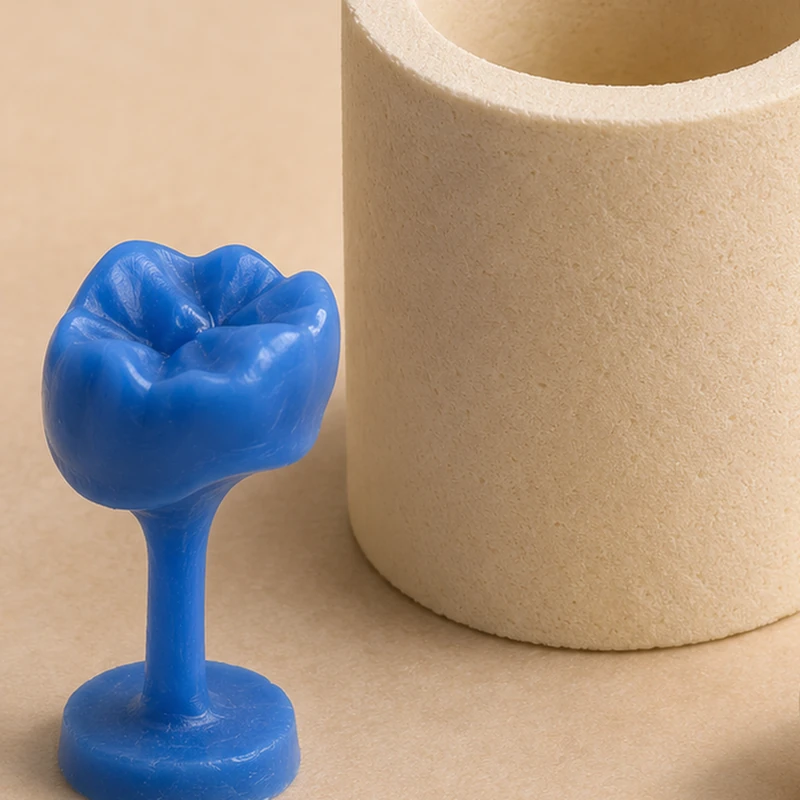
The shape of the future restoration can first be made as a wax pattern. A sprue connects it to the pressing pathway.
After burnout a cavity remains in the investment. A heated ceramic ingot provides the material for pressing.
The pressed piece is removed from the investment and finished. Shape, fit and appearance are checked before fitting.
How the restoration was shaped.
A press ingot intended for the system.
No. Pressing takes place in the laboratory.
Three steps. No audio.
Each scene can also be selected manually.

Silent film with English on-screen text and simplified teaching images.
Layering builds up ceramic in successive applications. Depending on the design, a pressed structure can also be characterised or veneered.
Pressing describes the manufacturing process. Lithium disilicate is an example of a material available in a form suitable for pressing. The specific material still matters.
Milling cuts the restoration from a solid block. In pressing, heated, formable material is forced into a prepared mould.
The manufacturing name alone cannot predict an individual restoration's lifespan. The material, design and tooth condition also matter.
A question to bring along
Which material and manufacturing method are planned for my restoration?
Questions about a planned ceramic restoration can include both the choice of material and how it will be made.
Choose an appointmentAppointment selection at DoctolibPressing is a process. Lithium disilicate is a material.
Editorial research: . General information, not an individual diagnosis or treatment recommendation. Teaching illustrations are simplified and do not depict a patient case.
If you turn this on, this website stores which guides you open, separately from advertising preferences. The markers expire after a fixed 30-day period from activation. The list is not sent to us by this feature. You can turn it off here and delete the markers.
Other people using the same browser profile can also see the markers. German and English versions share one marker. Expired entries are removed the next time you open a page with this feature; deleting browser data may remove them earlier. “Viewed” means opened, not read or completed.