What if only one denture tooth is missing?
Keep the detached artificial tooth and have the denture checked. Do not glue it back yourself.

A denture fracture is a crack or break in a removable denture, for example in its acrylic base, a denture tooth or a retaining clasp. Keep the pieces and contact your dental practice. Stop wearing parts that injure your mouth or fit very loosely, and do not glue them yourself. Whether repair is suitable depends on an assessment of the damage, the denture and your mouth.
For training & practice ↓
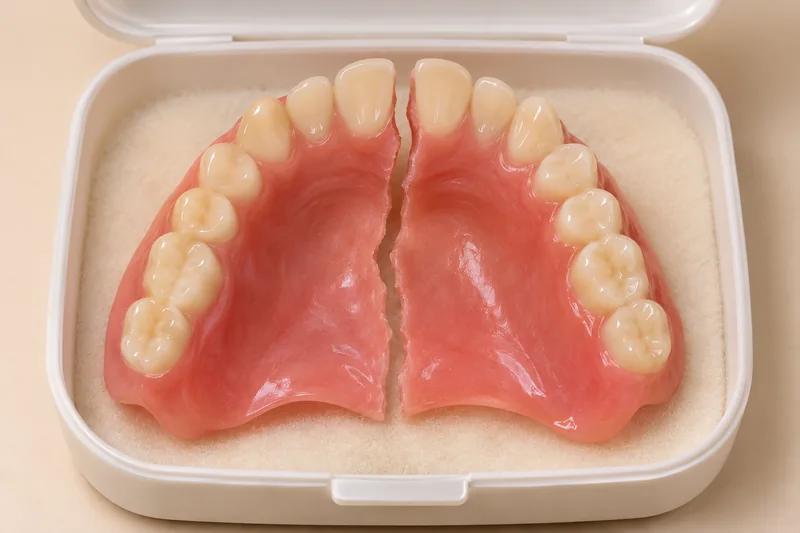
A cracked base, a broken denture tooth and a damaged clasp are different problems. A denture that is simply loose is not necessarily fractured. Tell the practice what happened and whether you have pain or an injury.
Keep all pieces you can find in a clean, protected container and bring them to the appointment. Do not force them together, glue, heat or grind them. Leave an injuring or very loose part out of your mouth until you have advice.
The examination establishes whether repair is sufficient or other care is needed. Fit, wear and the mouth lining also matter. Closing a crack does not by itself mean that the denture fits well again.
Keep the detached artificial tooth and have the denture checked. Do not glue it back yourself.
Clean it over a soft towel or a basin filled with water. Dropping a denture can damage it.
Repeated damage or an unstable fit are reasons to have the entire denture assessed. More adhesive is not a repair.
Three steps. No audio.
Each scene can also be selected manually.

Silent educational film with German on-screen text and simplified teaching images. Not a patient case or a promised treatment outcome. The full English explanation is available as text.
A fracture damages a component. A fit problem can make an otherwise intact denture rock; a sore spot affects the mouth lining. These problems can occur together. Adhesive does not join broken pieces, and relining alone does not replace fracture repair.
No. Household glue can damage denture acrylic and cannot replace a professional repair. A repair kit does not replace an examination either. Until you have dental advice, do not glue, file or heat the denture yourself.
A break without symptoms is not automatically a medical emergency. Still contact the practice promptly. Pain, an injury, marked swelling or bleeding that will not stop require urgent assessment. Mention these symptoms when you make contact.
This cannot be promised before an assessment. The damage, material and arrangements for treatment affect what is possible. Ask whether repair, adjustment or replacement is appropriate and what temporary options exist. The term alone cannot establish a fixed time or price.
Editorially suggested question to discuss with Dr Niusha Barahmand Pour:
Will repairing my denture be enough, or do its fit and loading need attention too?
A damaged denture should be examined together with its fit and the mouth lining.
Discuss a damaged dentureAppointment selection at DoctolibAssess material damage, fit and the condition of the mouth lining separately. Deciding on repair involves more than joining two broken edges.
Editorial research: . General information, not an individual diagnosis or treatment recommendation. Teaching illustrations are simplified and do not depict a patient case.