Replaces adjustment?
No.

Denture adhesive pads are preformed adhesive products used between a removable denture and the tissues supporting it. Like creams and powders, they are aids to denture retention. Suitability for a particular denture needs checking. A pad does not provide proper treatment for pain or an ill-fitting denture.
For training & practice ↓
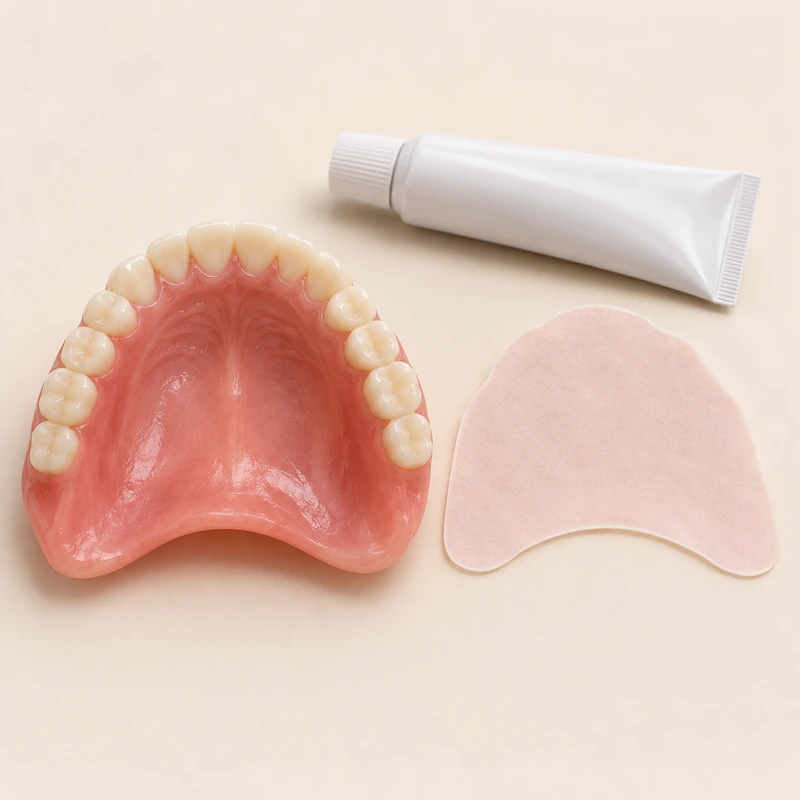
If a denture starts moving or causes a sore spot, have its fit checked first. More adhesive is not a lasting correction for a changed fit.
Pads, adhesive cream and relining materials are not interchangeable. Suitability, application and replacement depend on the product and professional advice.
Adhesive must not interfere with thorough cleaning. Remove residue as instructed and have the tissues and denture checked for changes.
No.
Product-dependent.
Yes, including residue removal.
Three steps. No audio.
Each scene can also be selected manually.

Silent educational film with German on-screen text and simplified teaching images. Not a patient case or a promised treatment outcome. The full English explanation is available as text.
Adhesives help retention. Relining adapts the denture base to changes in the supporting tissues.
Not universally. Handling, denture shape and individual needs vary. Instructions for one product do not automatically apply to another.
No. Relining professionally adapts the denture’s fitting surface. An adhesive does not correct the cause of poor fit.
There is no single interval for every product. Follow its instructions and individual advice; ask before use if anything is unclear.
A painful area needs assessment. Do not use adhesive instead of having the denture checked or adjusted.
Yes. Oral tissues, denture fit and cleaning still matter. Changes needing treatment can occur without natural teeth.
You can bring this question to your appointment:
Is an adhesive pad suitable for my denture, or does the fit need correction?
Bring your denture and the packaging of any adhesive you use to the discussion.
Discuss dental careAppointment selection at DoctolibAdhesives help retention. Relining adapts the denture base to changes in the supporting tissues.
Editorial research: . General information, not an individual diagnosis or treatment recommendation. Teaching illustrations are simplified and do not depict a patient case.
If you turn this on, this website stores which guides you open, separately from advertising preferences. The markers expire after a fixed 30-day period from activation. The list is not sent to us by this feature. You can turn it off here and delete the markers.
Other people using the same browser profile can also see the markers. German and English versions share one marker. Expired entries are removed the next time you open a page with this feature; deleting browser data may remove them earlier. “Viewed” means opened, not read or completed.