What carries the mark?
The removable denture itself, often its acrylic base.

A denture identification mark links a removable denture to its owner. For example, a name label can be incorporated into the acrylic base. It is especially helpful when several people's dentures are cleaned in the same place or a denture is left behind in hospital.
For training & practice ↓
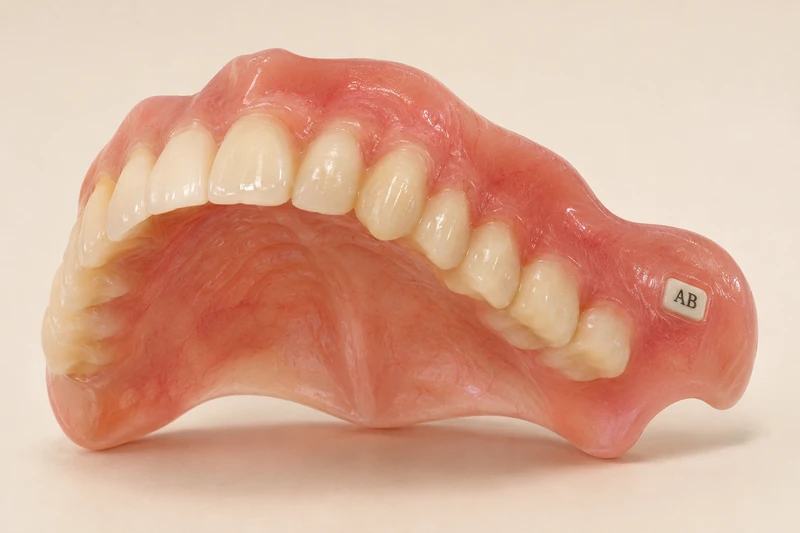
The location is selected to suit the material and design. The mark should remain legible without leaving a rough edge against the tissues.
If a person has both an upper and a lower denture, either can go missing on its own. Marking each one helps it find its way back.
A labelled pot is useful while the right denture is in the right pot. A mark on the denture adds another check when documenting belongings on admission and discharge.
The removable denture itself, often its acrylic base.
Discuss the decision with those involved, including when somebody helps with your care.
Ask your dentist to check any new rough edge or sore spot.
Three steps. No audio.
Each scene can also be selected manually.

Silent film with English on-screen text and simplified teaching images.
A number on a bill is useful only if the denture that has been found can be matched to it.
Ask your dental team whether a lasting mark can be added to its material. A laboratory label and a surface mark differ in how they are placed and how long they last.
Only if they identify you unambiguously in that setting. Discuss what information is needed and whether you want your denture marked.
Hand it to the responsible care or dental team for identification and appropriate cleaning. Nobody should try it in to see whether it fits.
A question to bring along
Which mark suits my denture material and living arrangements?
Bring both dentures when discussing identification after manufacture.
Choose a dental appointmentAppointment selection at DoctolibStorage, cleaning and identification each serve a separate purpose in denture care.
Editorial research: . General information, not an individual diagnosis or treatment recommendation. Teaching illustrations are simplified and do not depict a patient case.
If you turn this on, this website stores which guides you open, separately from advertising preferences. The markers expire after a fixed 30-day period from activation. The list is not sent to us by this feature. You can turn it off here and delete the markers.
Other people using the same browser profile can also see the markers. German and English versions share one marker. Expired entries are removed the next time you open a page with this feature; deleting browser data may remove them earlier. “Viewed” means opened, not read or completed.