The seal in the crown
The temporary seal in the crown covers the opening used for treatment.

A temporary filling closes an opening in a tooth for a limited period. During root canal treatment it can cover the opening between appointments. Your dentist can remove it to continue treatment or to place the final restoration.
For training & practice ↓
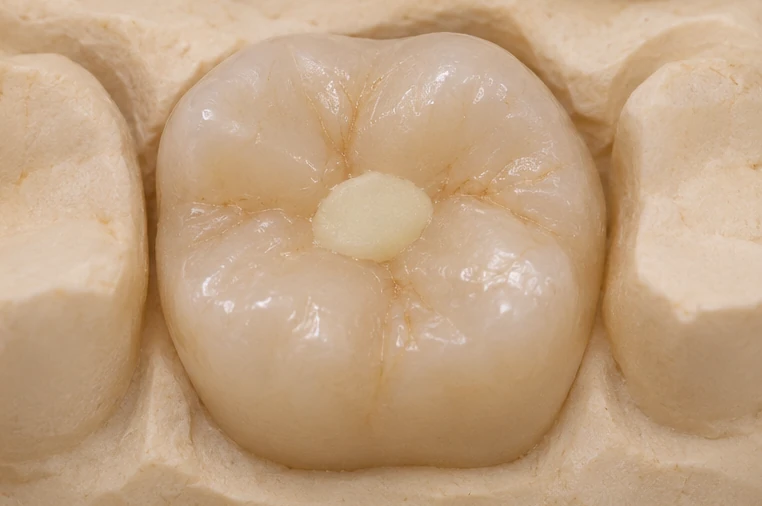
The temporary seal in the crown covers the opening used for treatment.
Continuing treatment requires access to the entrances of the root canals.
The root filling lies deeper in the canal. The crown may still have a temporary seal above it.
The temporary seal in the crown covers the opening used for treatment.
Continuing treatment requires access to the entrances of the root canals.
The root filling lies deeper in the canal. The crown may still have a temporary seal above it.
The temporary seal in the crown covers the opening used for treatment.
Continuing treatment requires access to the entrances of the root canals.
The root filling lies deeper in the canal. The crown may still have a temporary seal above it.
Three steps. No audio.
Each scene can also be selected manually.

Silent film with English on-screen text and simplified teaching images.
The root filling is deep inside the cleaned canals. The temporary filling sits above it, in the crown of the tooth. A tooth can therefore have a completed root filling and still have a temporary filling at the top. Before you leave, ask which stage has been completed and what comes next.
The root filling is deep inside the cleaned canals. The temporary filling sits above it, in the crown of the tooth. A tooth can therefore have a completed root filling and still have a temporary filling at the top. Before you leave, ask which stage has been completed and what comes next.
After root canal treatment, protect the tooth from hard chewing until it has been definitively restored. Follow the advice given for your tooth and clean the area gently. If this tooth suddenly feels much higher than its neighbours when you close your mouth, contact your dentist.
If the temporary filling falls out or you can feel an open hole again, contact the treating dental practice promptly, even if the tooth feels comfortable. The dentist can assess whether the opening needs to be sealed again. Some temporary materials may lose a thin surface layer. If you cannot tell how much you have lost, ask the practice. Worsening pain or visible swelling also needs prompt assessment.
A question to ask
Which part of my treatment is final and which part has to be replaced at the next visit?
Choose an appointment to discuss your own tooth or restoration.
Choose an appointmentAppointment selection at DoctolibCoronal means towards the crown. The coronal seal protects the access to the canal system from saliva and bacteria. Elapsed time alone does not establish whether a particular temporary restoration is still intact.
Editorial research: . General information, not an individual diagnosis or treatment recommendation. Teaching illustrations are simplified and do not depict a patient case.
If you turn this on, this website stores which guides you open, separately from advertising preferences. The markers expire after a fixed 30-day period from activation. The list is not sent to us by this feature. You can turn it off here and delete the markers.
Other people using the same browser profile can also see the markers. German and English versions share one marker. Expired entries are removed the next time you open a page with this feature; deleting browser data may remove them earlier. “Viewed” means opened, not read or completed.