What makes it different?
The double crown has an intentionally designed clearance.

A resilient telescopic crown is a double crown with intentionally designed clearance between its inner and outer components. In a suitable construction, the denture base can move a limited amount towards the mucosa under load. Allowing this movement and preventing the denture from lifting off are separate functions. How they are provided depends on the particular denture system.
For training & practice ↓
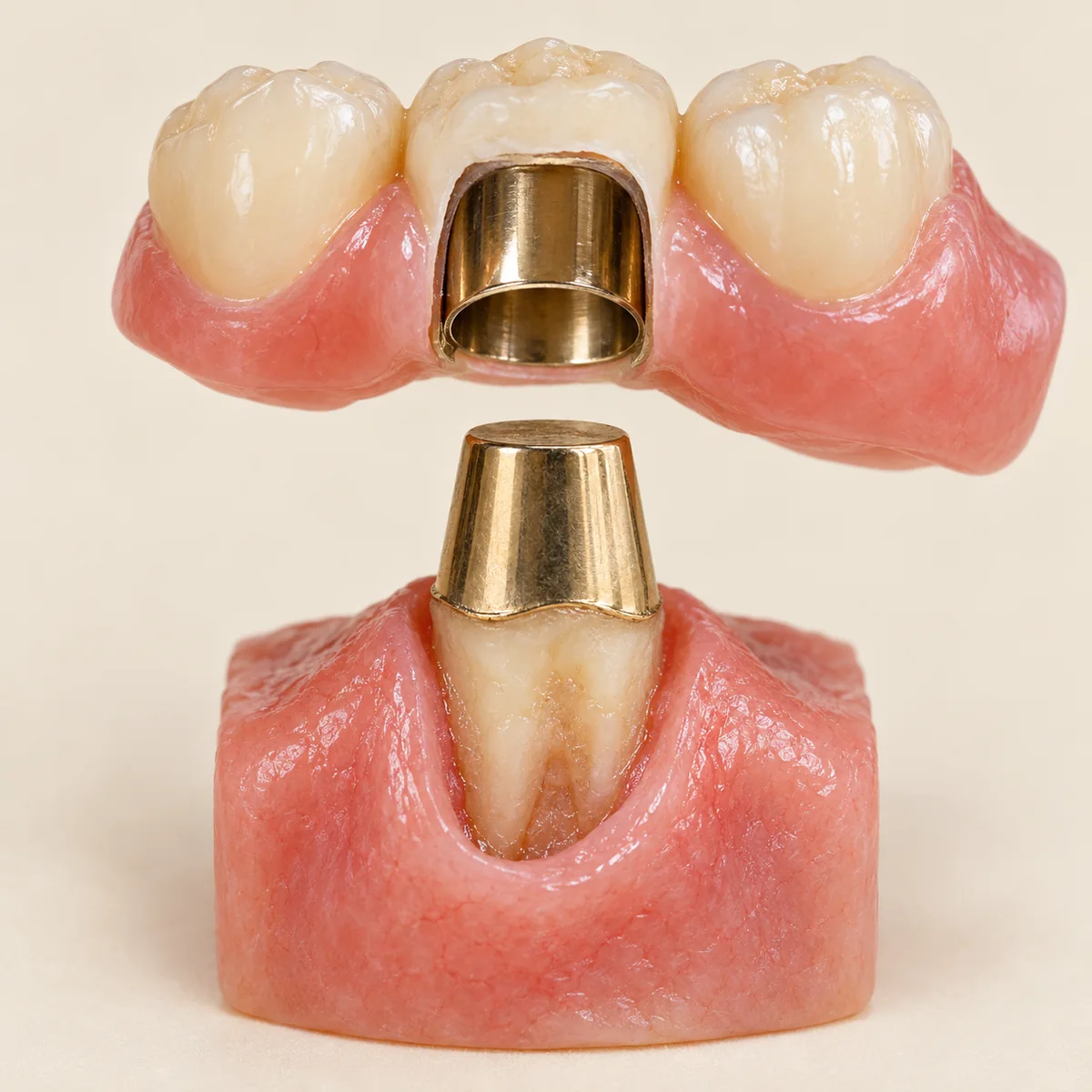
The double crown includes a designed clearance. The inner crown remains on the support; the outer component forms part of the removable denture.
During chewing, mucosa beneath a supported denture base yields to a limited extent. A resilient design takes this into account. Uncontrolled rocking is not the intended outcome.
Depending on the system, additional attachments can resist lifting. New looseness, sore spots or a change in the bite should prompt an examination of the construction.
The double crown has an intentionally designed clearance.
No. Selection depends on the supports, tissue support and overall construction.
The fit, support and retentive components should be checked.
Three steps. No audio.
Each scene can also be selected manually.

Silent educational film with German on-screen text and simplified teaching images. Not a patient case or a promised treatment outcome. The full English explanation is available as text.
Here, resilience concerns the allowance for yielding tissues or planned movement. Retention is resistance to removing the denture. The construction must provide both functions appropriately.
No. Conventional telescopic and conical constructions can have different support arrangements. Resilient designs specifically include planned clearance and support through the denture base.
Planned movement is different from new looseness. Changed fit, discomfort or insecure retention should be assessed rather than explained away by the term resilience.
This depends on the system. The published Marburg double-crown system combines clearance fit with additional retentive attachments. Not every resilient design has the same construction.
You can bring this question to your appointment:
How are support, movement and retention each planned in my denture?
If a telescopic denture is planned or its retention changes, you can discuss the exact construction and its care.
Discuss your findingsAppointment selection at DoctolibHere, resilience concerns the allowance for yielding tissues or planned movement. Retention is resistance to removing the denture. The construction must provide both functions appropriately.
Editorial research: . General information, not an individual diagnosis or treatment recommendation. Teaching illustrations are simplified and do not depict a patient case.