Who might use one?
Someone comfortable with its handle and movement.

A sonic toothbrush is an electric brush with rapidly vibrating bristles. The bristles still need to be guided systematically across every tooth surface. “Sonic” does not mean contact-free cleaning or guaranteed protection from decay.
For training & practice ↓
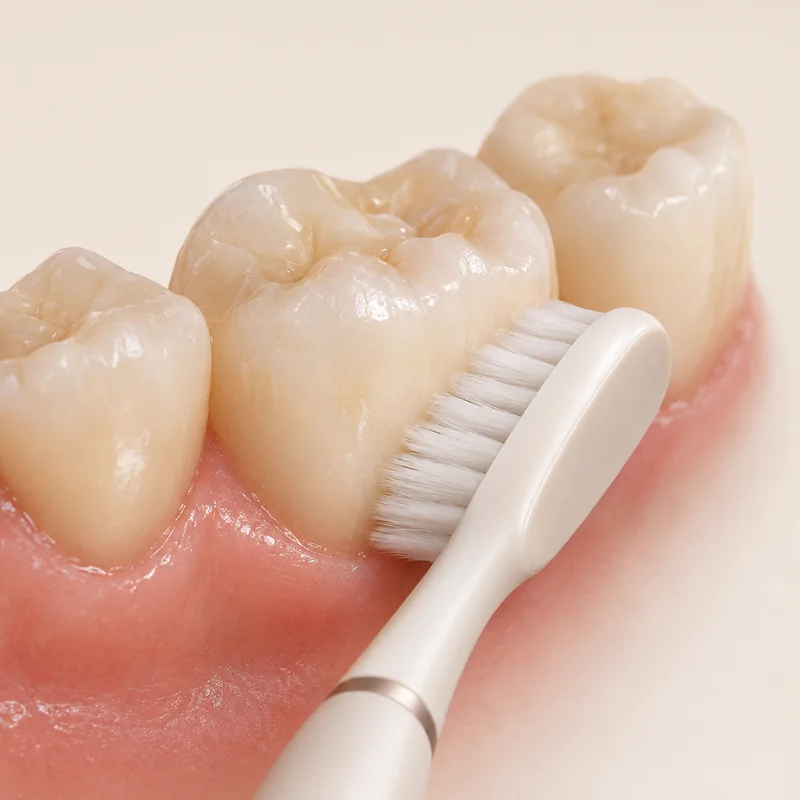
The motor moves the bristles to disrupt soft plaque where they reach the tooth. This does not remove firmly attached calculus.
Move slowly across outer, inner and chewing surfaces without pressing hard. Follow the handling instructions for the particular device.
Brush twice daily with fluoride toothpaste and clean between teeth appropriately. A timer supports timing; it cannot replace technique or assessment.
Someone comfortable with its handle and movement.
Soft bristles and suitable technique.
Fluoride toothpaste and appropriate interdental cleaning.
Three steps. No audio.
Each scene can also be selected manually.

Silent educational film with German on-screen text and simplified teaching images. Not a patient case or a promised treatment outcome. The full English explanation is available below.
The motor moves the bristles to disrupt soft plaque where they reach the tooth. This does not remove firmly attached calculus.
Move slowly across outer, inner and chewing surfaces without pressing hard. Follow the handling instructions for the particular device.
Brush twice daily with fluoride toothpaste and clean between teeth appropriately. A timer supports timing; it cannot replace technique or assessment.
Daily brushing removes soft plaque. It does not replace examination or professional removal of hard deposits.
The head needs to reach all accessible outer, inner and chewing surfaces systematically. The basic recommendation is about two minutes twice daily; the device instructions explain appropriate handling.
No. Manual brushes can also clean effectively. Access, technique and consistent use matter.
Repeated bleeding needs assessment. Extra pressure is not the answer; the head, technique and gums should be checked.
Editorially suggested question to discuss with Dr Niusha Barahmand Pour:
Which surfaces am I missing with my current brush head?
A dental appointment can help identify missed areas in your own routine.
Discuss daily oral careAppointment selection at DoctolibDaily brushing removes soft plaque. It does not replace examination or professional removal of hard deposits.
Editorial research: . General information, not an individual diagnosis or treatment recommendation. Teaching illustrations are simplified and do not depict a patient case.