What leaks?
Saliva through an abnormal connection.

A salivary fistula is an abnormal connection through which saliva from a gland or duct reaches an unintended site, such as a skin wound. It may occur after parotid gland surgery, for example. Not every leaking wound is a salivary fistula; the source and cause need examination.
For training & practice ↓
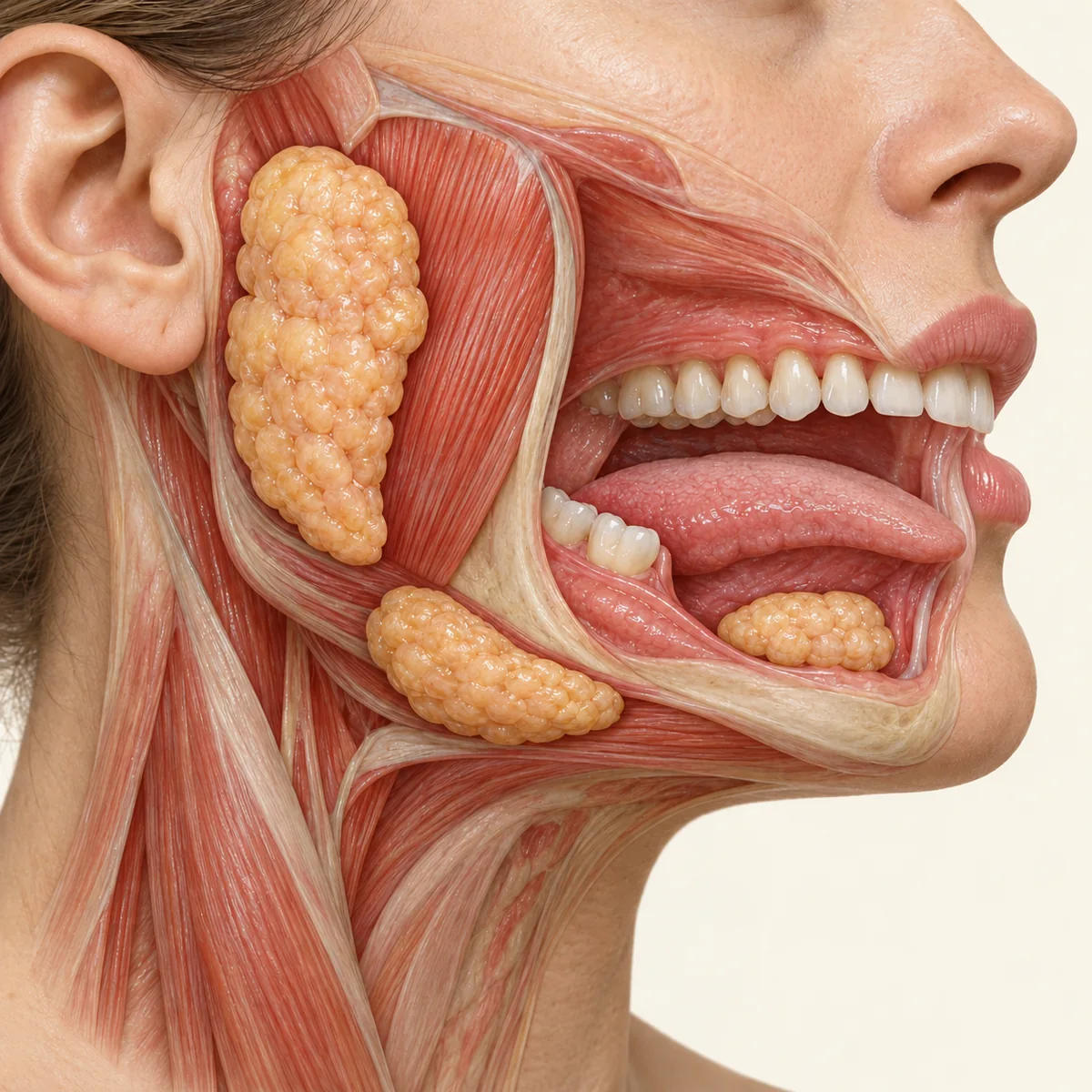
Saliva normally enters the mouth through a duct. A fistula provides an additional abnormal connection, for example to the skin or a surgical wound.
A leaking area, swelling and previous procedures are relevant history. Examination establishes whether the fluid is saliva and which gland or duct is involved.
Some postoperative fistulas may heal; others need further measures. Care depends on the cause and progress. Do not squeeze, puncture or glue the area shut yourself.
Saliva through an abnormal connection.
No. The finding needs assessment.
No. Agree wound care and follow-up with the team.
Three steps. No audio.
Each scene can also be selected manually.

Silent educational film with German on-screen text and simplified teaching images. Not a patient case or a promised treatment outcome. The full English explanation is available as text.
A normal duct opens at its usual anatomical location in the mouth. A fistula is an additional abnormal connection; a visible normal duct opening is not itself disease.
No. A dental sinus tract commonly drains inflammatory discharge from a dental source. A salivary fistula originates in the salivary gland system.
Some fistulas after parotid surgery can do so. This does not guarantee healing or justify waiting without professional follow-up.
For new or continuing fluid leakage after a procedure, or increasing redness, pain or swelling. Follow the specific postoperative instructions you were given.
You can bring this question to your appointment:
Where does the fluid come from, and which assessment and follow-up plan is appropriate?
An individual examination can clarify the findings and suitable next steps.
Arrange an assessmentAppointment selection at DoctolibA normal duct opens at its usual anatomical location in the mouth. A fistula is an additional abnormal connection; a visible normal duct opening is not itself disease.
Editorial research: . General information, not an individual diagnosis or treatment recommendation. Teaching illustrations are simplified and do not depict a patient case.
If you turn this on, this website stores which guides you open, separately from advertising preferences. The markers expire after a fixed 30-day period from activation. The list is not sent to us by this feature. You can turn it off here and delete the markers.
Other people using the same browser profile can also see the markers. German and English versions share one marker. Expired entries are removed the next time you open a page with this feature; deleting browser data may remove them earlier. “Viewed” means opened, not read or completed.