What lies under the ceramic?
Natural tooth structure or a restorative core.

Substrate shade is the colour of the prepared tooth or core beneath a restoration. Thin ceramic transmits some light, so the underlying shade can influence the final appearance.
For training & practice ↓
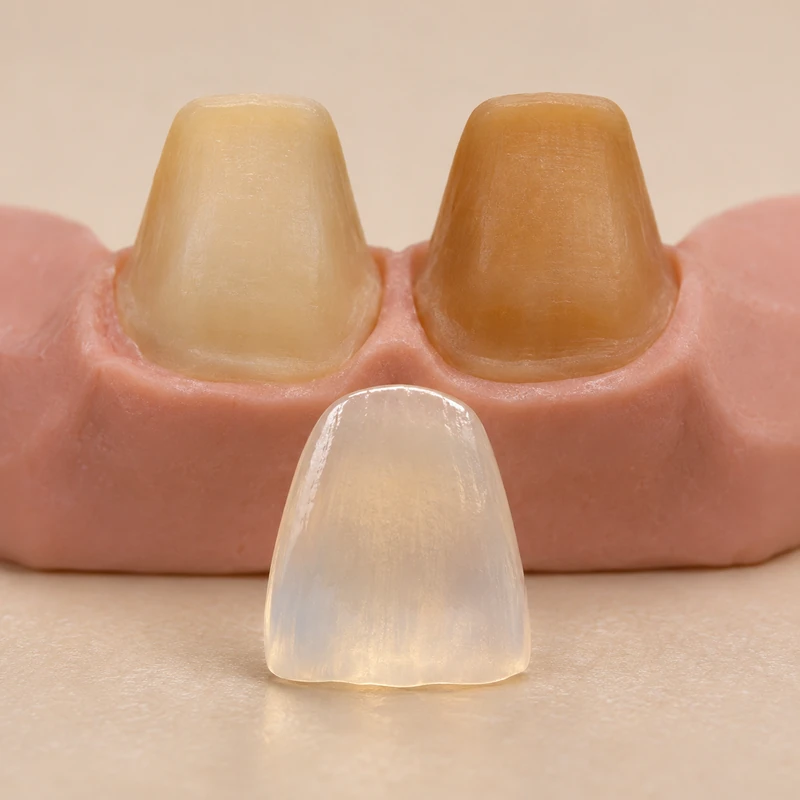
A shaped tooth or core with its own colour lies under a ceramic crown. The laboratory can take this shade into account.
With thin translucent ceramic, the substrate contributes to the overall appearance. A darker substrate can make this particularly noticeable.
The intended tooth shade and the prepared tooth's shade are two different pieces of information for the laboratory.
Natural tooth structure or a restorative core.
The underlying shade and the intended appearance.
One opportunity is a trial on the tooth that will receive the restoration.
Three steps. No audio.
Each scene can also be selected manually.

Silent film with English on-screen text and simplified teaching images.
A neighbouring tooth can provide a reference shade. Substrate shade is assessed on the tooth beneath the planned restoration.
Yes. In a laboratory study, switching between light and dark supporting materials changed the measured colour of the thin ceramic tested.
The colour alone does not determine this. Planning considers the remaining tooth structure, material, ceramic thickness and desired masking together.
Substrate shade describes what lies beneath the crown. Target shade describes how the finished crown should look beside neighbouring teeth.
A question to bring along
How does my underlying tooth colour affect the choice of ceramic?
If a ceramic restoration is being planned, you can ask how the shades will be matched.
Choose an appointmentAppointment selection at DoctolibThe substrate, material and target shades describe different aspects of the planned restoration.
Editorial research: . General information, not an individual diagnosis or treatment recommendation. Teaching illustrations are simplified and do not depict a patient case.
If you turn this on, this website stores which guides you open, separately from advertising preferences. The markers expire after a fixed 30-day period from activation. The list is not sent to us by this feature. You can turn it off here and delete the markers.
Other people using the same browser profile can also see the markers. German and English versions share one marker. Expired entries are removed the next time you open a page with this feature; deleting browser data may remove them earlier. “Viewed” means opened, not read or completed.