What is assessment for?
Documenting a match between tooth colour and a proposed restoration or whitening.

Tooth shade assessment systematically compares and records a tooth’s appearance, for example before a filling, crown or whitening. It involves more than light or dark: hue, colour intensity and the effect of light also matter.
For training & practice ↓
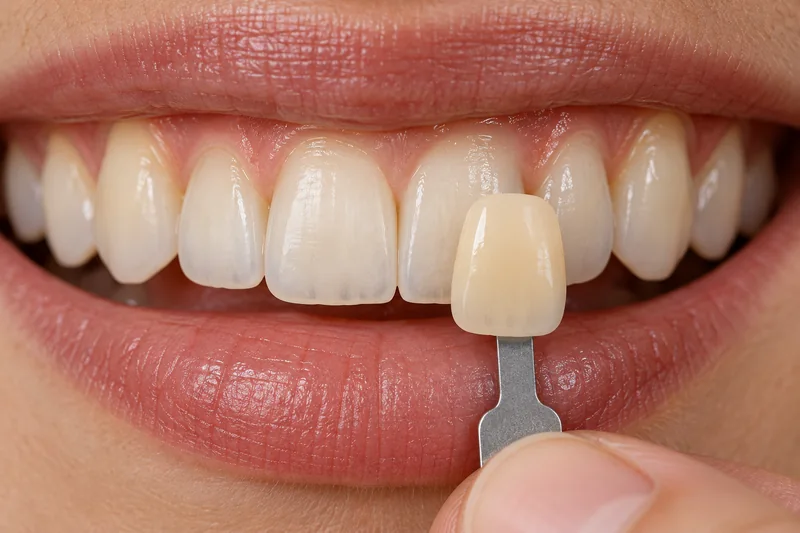
A shade sample is compared next to the natural tooth. Digital measurements may supplement the method. One shade name is a reference, not a complete description of every optical property.
Lighting and moisture influence appearance. A dehydrated tooth can look temporarily lighter; assessment needs to take this into account.
The recorded shade helps coordinate a restoration. The intended appearance is considered together with the existing tooth and the future material.
Documenting a match between tooth colour and a proposed restoration or whitening.
Visual comparison, with additional measurements or standardised photographs depending on the method.
Diagnose a condition on its own or guarantee perfectly identical optical behaviour of a material.
Three steps. No audio.
Each scene can also be selected manually.

Silent educational film with German on-screen text and simplified teaching images. Not a patient case or a promised treatment outcome. The full English explanation is available below.
A shade sample is compared next to the natural tooth. Digital measurements may supplement the method. One shade name is a reference, not a complete description of every optical property.
Lighting and moisture influence appearance. A dehydrated tooth can look temporarily lighter; assessment needs to take this into account.
The recorded shade helps coordinate a restoration. The intended appearance is considered together with the existing tooth and the future material.
Tooth colour initially describes appearance. Discolouration is a change in colour with different possible causes. Shade assessment alone does not identify the cause.
An ordinary photograph under arbitrary lighting is not a reliable basis. Lighting, camera and display alter the impression. Standardised dental photography can, however, contribute to a documented assessment.
No. A shade describes appearance. Examination is needed to determine whether decay, inflammation or another change is present.
Not necessarily. Loss of moisture can alter visible colour. A dependable comparison accounts for natural hydration and may be repeated.
An editorially suggested question for a discussion with Dr med dent Niusha Barahmand Pour:
Which natural differences in shade should be retained or considered in my restoration?
A comparison at the tooth can help with concerns about colour or a noticeable restoration.
Discuss shade and restorationsAppointment selection at DoctolibTooth colour initially describes appearance. Discolouration is a change in colour with different possible causes. Shade assessment alone does not identify the cause.
Editorial research: . General information, not an individual diagnosis or treatment recommendation. Teaching illustrations are simplified and do not depict a patient case.