Three steps?
Explain, demonstrate, carry out.

Tell-show-do prepares a dental procedure through explanation, demonstration and then carrying it out as described. It is particularly used in paediatric dentistry. Language and demonstration fit the patient’s development. It can make the visit more understandable but does not replace pain control or the consent required.
For training & practice ↓
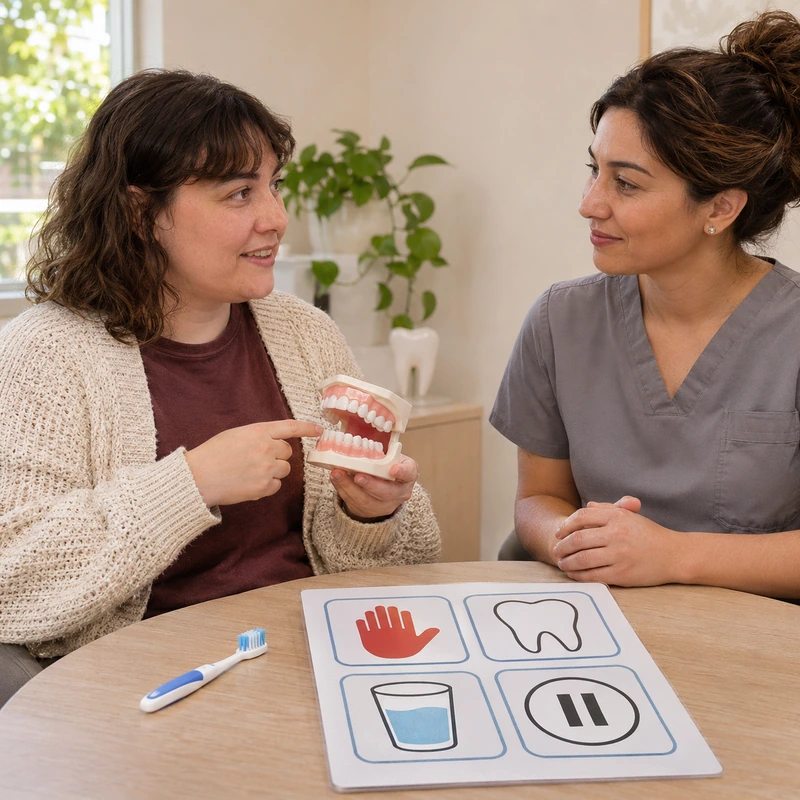
The team describes one small next step in suitable language. For example, a mirror helps show the back of a tooth.
First show the instrument outside the mouth. The person can ask questions; relevant sounds or sensations are demonstrated appropriately.
Then carry out the explained step. If uncertainty arises, discuss it and adapt the approach; demonstration is not a demand to endure discomfort.
Explain, demonstrate, carry out.
No.
No.
Three steps. No audio.
Each scene can also be selected manually.

Silent educational film with German on-screen text and simplified teaching images. Not a patient case or a promised treatment outcome. The full English explanation is available as text.
Tell-show-do explains a process. It is neither sedation nor local anaesthesia.
The aim is understandable preparation and trust. Surprises and misleading promises do not fit that aim.
No. Needs, development, previous experiences and how someone feels that day vary. Other or additional support may be needed.
No. Communication and pain control have different roles. Pain needs separate attention.
Yes. Discuss beforehand how the child, or you, can indicate a need for a break.
Ask-tell-ask begins by asking about knowledge or concerns, then explains and asks again about understanding and feelings. Tell-show-do specifically includes demonstration.
You can bring this question to your appointment:
Can we explain and demonstrate the next step first and agree on a pause signal?
Mention particular communication needs and previous experiences before the appointment.
Discuss dental careAppointment selection at DoctolibTell-show-do explains a process. It is neither sedation nor local anaesthesia.
Editorial research: . General information, not an individual diagnosis or treatment recommendation. Teaching illustrations are simplified and do not depict a patient case.
If you turn this on, this website stores which guides you open, separately from advertising preferences. The markers expire after a fixed 30-day period from activation. The list is not sent to us by this feature. You can turn it off here and delete the markers.
Other people using the same browser profile can also see the markers. German and English versions share one marker. Expired entries are removed the next time you open a page with this feature; deleting browser data may remove them earlier. “Viewed” means opened, not read or completed.