Where is the bonded joint?
Between the ceramic and the titanium base.

A titanium bonding base is a prefabricated metal connector used in certain implant restorations. For a hybrid abutment crown, the ceramic part is bonded to the base outside the mouth. The resulting unit can be screwed to the implant.
For training & practice ↓
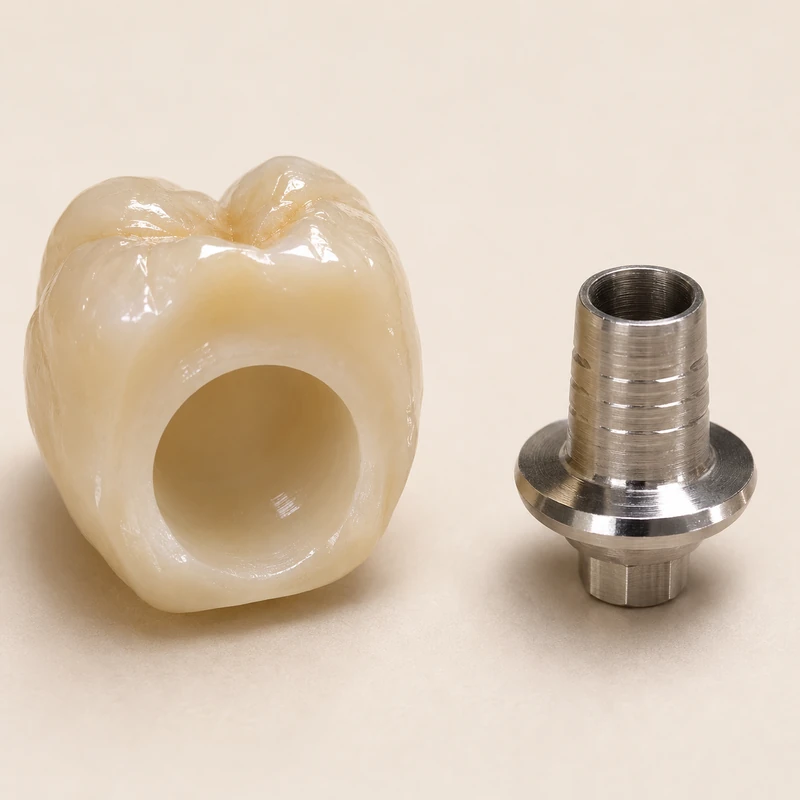
The short titanium base lies next to the hollow crown. The recess in the ceramic accommodates the base.
The ceramic-to-metal bond is made outside the mouth. A separate connection attaches the completed unit to the implant.
In a screw-retained unit, a channel provides access to the retaining screw. The opening is sealed after placement.
Between the ceramic and the titanium base.
Selected implant-supported restorations.
The outer ceramic in this example.
Three steps. No audio.
Each scene can also be selected manually.

Silent film with English on-screen text and simplified teaching images.
A separately cemented crown fits over an abutment. In the example shown the unit is bonded outside the mouth and then screw-retained.
Yes. In this design, bonding joins the ceramic to the titanium base. A screw secures the completed unit to the implant.
No. A crown on a natural tooth has a different foundation. Implant crowns also come in a variety of designs.
The base sits beneath or within the ceramic. What is visible at the margin depends on the design, position and tissues.
A question to bring along
Where is my restoration bonded and where is it screwed in?
If you want to understand the components of your implant crown, you can ask for its construction to be explained.
Choose an appointmentAppointment selection at DoctolibEach interface needs its own description of how the components are joined.
Editorial research: . General information, not an individual diagnosis or treatment recommendation. Teaching illustrations are simplified and do not depict a patient case.
If you turn this on, this website stores which guides you open, separately from advertising preferences. The markers expire after a fixed 30-day period from activation. The list is not sent to us by this feature. You can turn it off here and delete the markers.
Other people using the same browser profile can also see the markers. German and English versions share one marker. Expired entries are removed the next time you open a page with this feature; deleting browser data may remove them earlier. “Viewed” means opened, not read or completed.