When is the paste used?
During the try-in before definitive bonding.

Try-in paste is a temporary material used to preview a ceramic veneer. Between the tooth and veneer it simulates the shade effect of a corresponding luting composite. It is removed after the trial.
For training & practice ↓
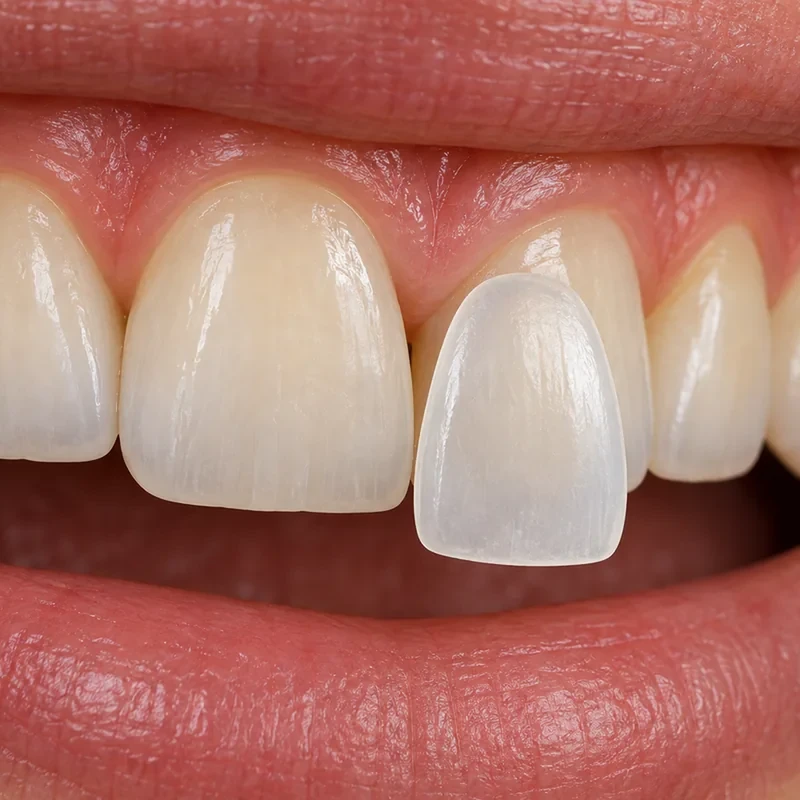
The underlying shade shows through thin ceramic. Its appearance can be assessed on the tooth it is meant for.
Paste fills the space between tooth and shell for a shade preview. It is used only during the trial.
Under comparable lighting, you can describe how the shell looks next to your other teeth.
During the try-in before definitive bonding.
The underlying shade, ceramic thickness and luting material interact.
Whether the shade looks right alongside your other teeth.
Three steps. No audio.
Each scene can also be selected manually.

Silent film with English on-screen text and simplified teaching images.
A mock-up previews the planned shape. Try-in paste previews the shade with the fabricated ceramic shell.
The trial paste does not harden into a permanent bond. The veneer can still be taken off before final cementation.
A laboratory study found differences in some thin ceramic specimens between the trial and the cured luting material. The preview helps compare options, but cannot predict the exact result.
During the trial, while you can look at the veneer and neighbouring teeth together. You can then discuss whether an adjustment would be helpful.
A question to bring along
Can we look at the trial veneer alongside my neighbouring teeth?
A consultation is an opportunity to discuss a shade trial before a veneer is fitted.
Choose an appointmentAppointment selection at DoctolibShade assessment complements checks of shape and fit.
Editorial research: . General information, not an individual diagnosis or treatment recommendation. Teaching illustrations are simplified and do not depict a patient case.
If you turn this on, this website stores which guides you open, separately from advertising preferences. The markers expire after a fixed 30-day period from activation. The list is not sent to us by this feature. You can turn it off here and delete the markers.
Other people using the same browser profile can also see the markers. German and English versions share one marker. Expired entries are removed the next time you open a page with this feature; deleting browser data may remove them earlier. “Viewed” means opened, not read or completed.