Surgery?
Yes.

The tunnel technique is a surgical approach for selected gingival recessions. A connected space is prepared beneath existing gum tissue, often to receive a connective tissue graft. The interdental papillae are kept as continuous as possible.
For training & practice ↓
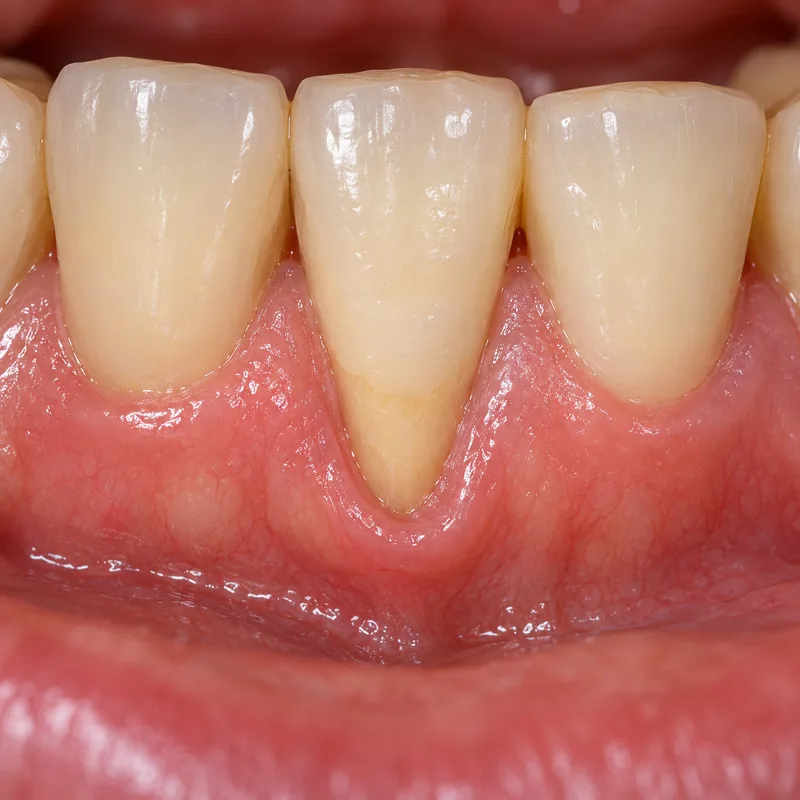
The access lies in soft tissue around the affected teeth. No tunnel is drilled through the tooth or jawbone. Several adjacent sites may be included in planning.
The patient’s connective tissue, for example from the palate, is often added to support thickness and possible root coverage. Variants differ in access and tissue advancement.
Recession extent, tissue conditions and care affect the aim. Complete coverage is uncertain. Pain, bleeding, infection or further surgery are possible risks.
Yes.
No.
Yes, with an individual cleaning and review plan.
Three steps. No audio.
Each scene can also be selected manually.

Silent educational film with German on-screen text and simplified teaching images. Not a patient case or a promised treatment outcome. The full English explanation is available as text.
A tunnel works beneath tissue kept as continuous as possible. A coronally advanced flap repositions a flap towards the tooth crown. Some tunnel variants combine both principles.
No. It still involves surgical tissue preparation and sutures. The term describes access design, not a procedure without intervention.
Not in every variant. The benefits and limits of the patient’s tissue or an alternative, including any donor site, need discussion.
No. Choice depends on the defect and treatment aims. Comparative trials assess different techniques and patient groups.
You can bring this question to your appointment:
Why does this tunnel variant suit my findings, and how much root coverage is realistic?
Discuss your individual findings and whether a referral is appropriate.
Discuss your findingsAppointment selection at DoctolibA tunnel works beneath tissue kept as continuous as possible. A coronally advanced flap repositions a flap towards the tooth crown. Some tunnel variants combine both principles.
Editorial research: . General information, not an individual diagnosis or treatment recommendation. Teaching illustrations are simplified and do not depict a patient case.