What does an ultrasonic scaler do?
It removes deposits using a vibrating tip and water.

An ultrasonic scaler is a professional cleaning instrument with a rapidly vibrating working tip. Used with a water supply, it removes deposits and calculus from suitable tooth surfaces.
For training & practice ↓
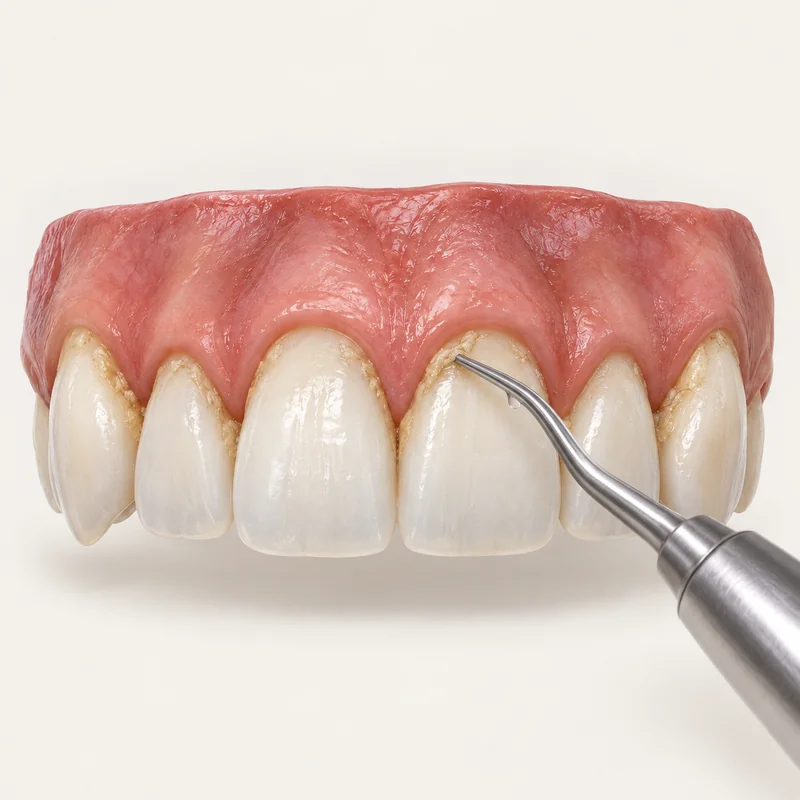
The working tip transmits mechanical vibrations to deposits. Water accompanies its use and is removed by suction. This differs from an air-water-powder stream.
Different tips are available for different sites. Findings, access and surface determine selection. Implants and restorations require particular material precautions.
Noise, water and sensitive sites can be uncomfortable. A pause signal helps. The team can adapt the approach and discuss local anaesthesia when needed.
It removes deposits using a vibrating tip and water.
No, report pain and agree on a pause signal.
No, the two approaches can complement each other.
Three steps. No audio.
Each scene can also be selected manually.

Silent educational film with German on-screen text and simplified teaching images. Not a patient case or a promised treatment outcome. The full English explanation is available as text.
A scaler is a professional deposit-removal instrument. An electric toothbrush does not replace this treatment.
Both can be effective. Guidelines support hand or powered instruments, including combinations; selection depends on findings and practical circumstances.
No. A scaler professionally removes deposits using a working tip. A toothbrush is for daily home cleaning.
The tip works in a water stream; fluid and loosened debris are suctioned away. Mention any difficulty with water or suction.
When indicated and with a suitable tip. The examination informs the extent of treatment and possible local anaesthesia.
Yes. Mention medical implants and relevant conditions in particular. Compatibility must be assessed for the specific devices and your circumstances.
You can bring this question to your appointment:
Which instruments suit my sensitive areas and restorations?
Discuss which cleaning approach fits your findings.
Discuss dental careAppointment selection at DoctolibA scaler is a professional deposit-removal instrument. An electric toothbrush does not replace this treatment.
Editorial research: . General information, not an individual diagnosis or treatment recommendation. Teaching illustrations are simplified and do not depict a patient case.
If you turn this on, this website stores which guides you open, separately from advertising preferences. The markers expire after a fixed 30-day period from activation. The list is not sent to us by this feature. You can turn it off here and delete the markers.
Other people using the same browser profile can also see the markers. German and English versions share one marker. Expired entries are removed the next time you open a page with this feature; deleting browser data may remove them earlier. “Viewed” means opened, not read or completed.