Where are the marks?
Along the sides of the tongue, where it touches the teeth.

The teeth can leave a row of shallow impressions in the sides of the tongue where the two surfaces press together. The lining often stays intact and the indentations may be painless. The term scalloped tongue describes that outline.
For training & practice ↓
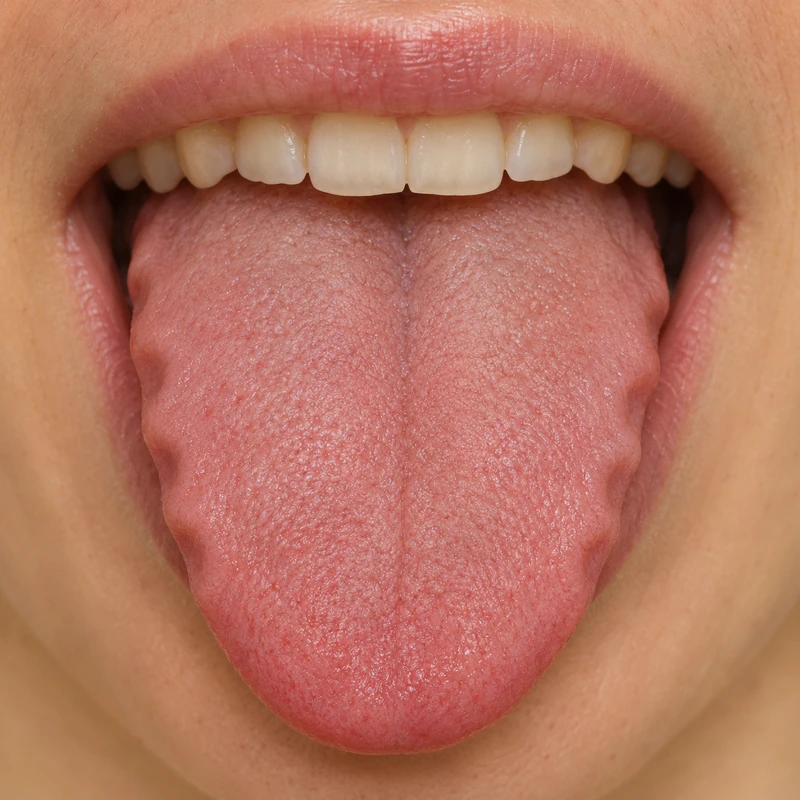
Shallow indentations along the side of the tongue can follow the outline of the neighbouring teeth.
The surface in these indentations is intact. A fresh bite may leave a sore wound.
A fissured tongue has grooves on its upper surface. The tooth marks in the first image are along the edge.
Shallow indentations along the side of the tongue can follow the outline of the neighbouring teeth.
The surface in these indentations is intact. A fresh bite may leave a sore wound.
A fissured tongue has grooves on its upper surface. The tooth marks in the first image are along the edge.
Along the sides of the tongue, where it touches the teeth.
The indentations alone cannot tell you this.
When the marks appeared and whether there is any new soreness, swelling or other change.
Three steps. No audio.
Each scene can also be selected manually.

Silent film with English on-screen text and simplified teaching images.
A fissured tongue has grooves on its upper surface. The tooth marks in the first image are along the edge.
A tooth impression is a dent in an otherwise intact surface. An accidental bite may leave a single sore spot, a cut or some bleeding. Have a persistent sore or broken area examined.
The marks alone cannot tell you this. An examination can assess the space available for your tongue, the teeth alongside the marks and any discomfort. Mention morning jaw muscle pain or daytime clenching if you have noticed either.
Studies have found a scalloped tongue in some people with obstructive sleep apnoea. People without sleep apnoea can have the same marks. If someone notices pauses in your breathing while you sleep, or you regularly fall asleep unintentionally during the day, tell your doctor regardless of the appearance of your tongue.
Note when they appeared and whether the size, sensitivity or movement of your tongue has changed. Show new or persistent marks to your dentist or doctor. If your tongue suddenly swells and breathing becomes difficult, call 112 in Germany.
A question to bring along
Do these marks match the adjacent teeth, and is there an area of the lining that needs attention?
Arrange an examination if the change is new or persists.
Choose an appointmentAppointment selection at DoctolibRecord the site of the change and whether the surface is intact.
Editorial research: . General information, not an individual diagnosis or treatment recommendation. Teaching illustrations are simplified and do not depict a patient case.
If you turn this on, this website stores which guides you open, separately from advertising preferences. The markers expire after a fixed 30-day period from activation. The list is not sent to us by this feature. You can turn it off here and delete the markers.
Other people using the same browser profile can also see the markers. German and English versions share one marker. Expired entries are removed the next time you open a page with this feature; deleting browser data may remove them earlier. “Viewed” means opened, not read or completed.