What is indirect vision?
The clinician looks at the reflection of the tooth surface. This can help on the tongue side of a back tooth. The mirror and the light are repositioned to show the surface clearly.

A dental mirror gives a view of surfaces that are difficult to see directly. It can reflect light and gently hold the cheek or tongue away. This lets the clinician inspect a surface from a different angle.
For training & practice ↓
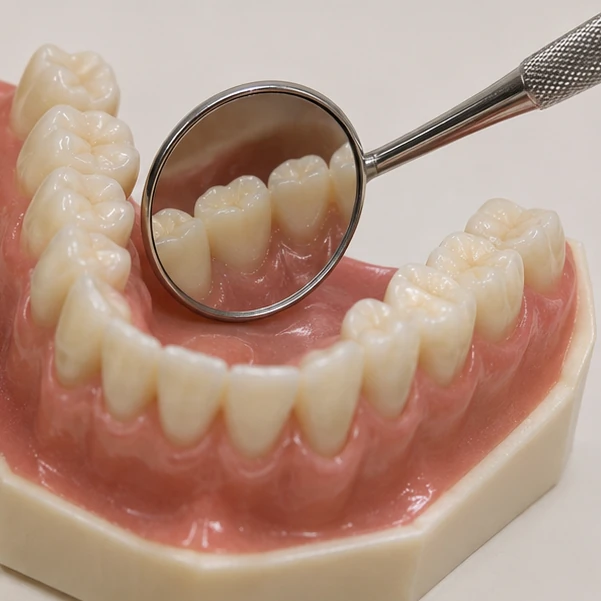
The reflection shows side surfaces obscured from the original viewing angle.
This cutaway model exposes the inside. A mouth mirror normally shows the surface.
A hidden area may require additional imaging. The clinical findings guide that decision.
The reflection shows side surfaces obscured from the original viewing angle.
This cutaway model exposes the inside. A mouth mirror normally shows the surface.
A hidden area may require additional imaging. The clinical findings guide that decision.
The clinician looks at the reflection of the tooth surface. This can help on the tongue side of a back tooth. The mirror and the light are repositioned to show the surface clearly.
The back of the mirror can hold the cheek away. This makes space for inspection and keeps soft tissue clear of instruments. Let the team know if the pressure feels uncomfortable.
The mirror shows accessible surfaces. Findings and symptoms guide whether an X-ray or another test could help with a hidden area.
Three steps. No audio.
Each scene can also be selected manually.

Silent film with English on-screen text and simplified teaching images.
A mirror redirects the view to a surface. A cutaway model exposes internal layers for teaching.
The clinician looks at the reflection of the tooth surface. This can help on the tongue side of a back tooth. The mirror and the light are repositioned to show the surface clearly.
The back of the mirror can hold the cheek away. This makes space for inspection and keeps soft tissue clear of instruments. Let the team know if the pressure feels uncomfortable.
The mirror shows accessible surfaces. Findings and symptoms guide whether an X-ray or another test could help with a hidden area.
A question to ask
Could you show me which surface you are examining?
At the examination, point out the exact spot that is bothering you.
Choose an appointmentAppointment selection at DoctolibDirect and indirect vision, reflected light and tissue retraction are different functions. Record the surface that was actually visible.
Editorial research: . General information, not an individual diagnosis or treatment recommendation. Teaching illustrations are simplified and do not depict a patient case.
If you turn this on, this website stores which guides you open, separately from advertising preferences. The markers expire after a fixed 30-day period from activation. The list is not sent to us by this feature. You can turn it off here and delete the markers.
Other people using the same browser profile can also see the markers. German and English versions share one marker. Expired entries are removed the next time you open a page with this feature; deleting browser data may remove them earlier. “Viewed” means opened, not read or completed.