The same as a birthday?
No.

Dental age describes the developmental maturity of the dentition, for example through erupted teeth and crown or root formation. It is not the same as chronological age measured from birth. Some methods relate tooth-development stages to a reference population; the result is an estimate with limitations. Treatment planning depends on the actual developmental features and the overall findings.
For training & practice ↓
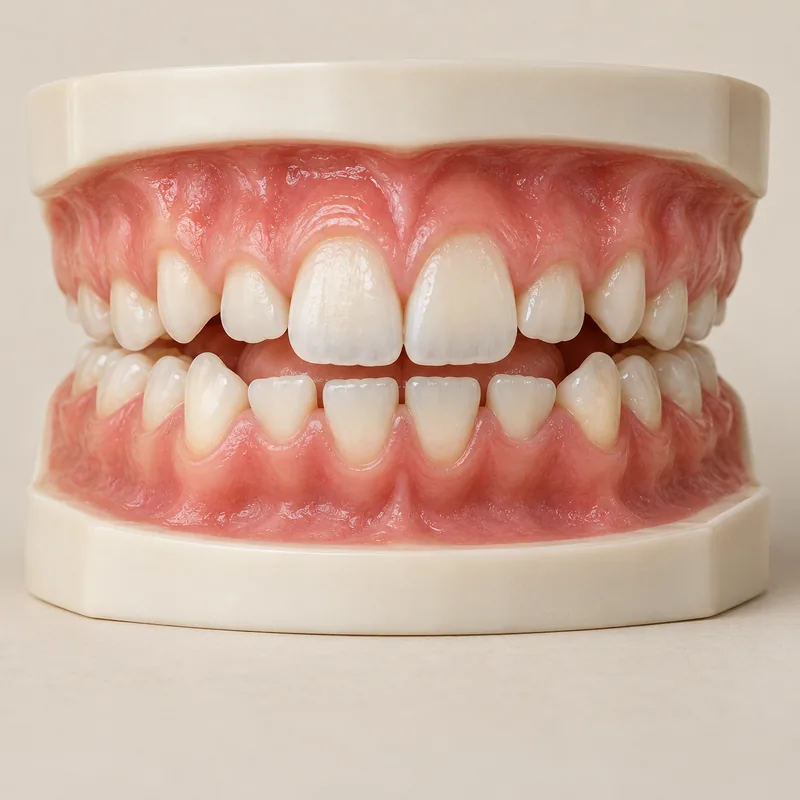
Children of the same chronological age may reach different stages of tooth replacement. Erupted teeth and the formation of individual teeth provide different information.
A method may classify crown, root and root-tip formation. Reference values support comparison but do not replace individual assessment or reveal an exact date of birth.
Imaging is used only when justified by a specific clinical question. A dental-age number alone is not a reason for additional radiographs or treatment.
No.
No.
Yes, alongside other findings.
Three steps. No audio.
Each scene can also be selected manually.

Silent educational film with German on-screen text and simplified teaching images. Not a patient case or a promised treatment outcome. The full English explanation is available as text.
Chronological age is calculated from the date of birth. Dental age describes or estimates biological maturity; the two need not match.
No. Development varies. A difference first needs interpretation and does not automatically indicate disease.
No. Dental maturity and physical growth are different features. Orthodontic decisions should not rely on a dental-age number alone.
No. Eruption and tooth replacement can be assessed clinically. Additional imaging depends on a justified diagnostic question, not simply a desire for a number.
You can bring this question to your appointment:
Which specific developmental features affect the appropriate timing of treatment?
An individual assessment can clarify the findings and whether referral is needed.
Arrange an assessmentAppointment selection at DoctolibChronological age is calculated from the date of birth. Dental age describes or estimates biological maturity; the two need not match.
Editorial research: . General information, not an individual diagnosis or treatment recommendation. Teaching illustrations are simplified and do not depict a patient case.
If you turn this on, this website stores which guides you open, separately from advertising preferences. The markers expire after a fixed 30-day period from activation. The list is not sent to us by this feature. You can turn it off here and delete the markers.
Other people using the same browser profile can also see the markers. German and English versions share one marker. Expired entries are removed the next time you open a page with this feature; deleting browser data may remove them earlier. “Viewed” means opened, not read or completed.