What matters when assessing wear?
Whether it is progressing.

Dental attrition is wear caused by direct contact between opposing teeth. Smooth facets may develop on incisal edges or cusps and match when the teeth meet. A single facet cannot establish current sleep bruxism.
For training & practice ↓
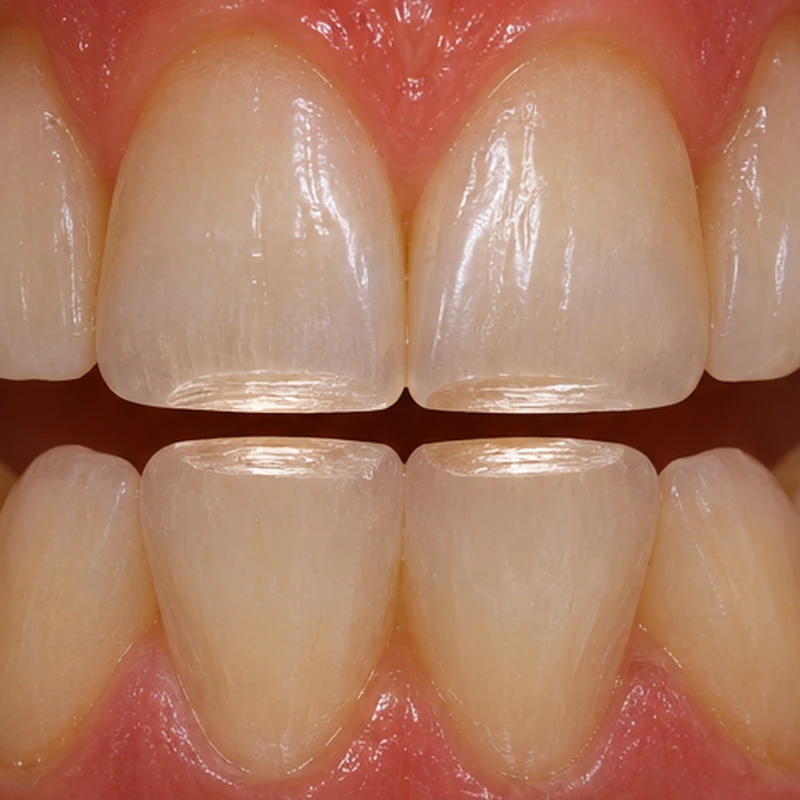
The model shows flat, shiny edges on opposing incisors. Their shape and contact during jaw movement help identify a wear pattern.
A smooth, scooped-out palatal surface, as illustrated here, is a different sign. More than one wear process can contribute.
Previous photos, casts or scans can show whether edges are shortening. Sensitivity, chipping and difficulty chewing are also relevant.
Whether it is progressing.
When or how often the contact occurred.
Older photos and a description of recent changes.
Three steps. No audio.
Each scene can also be selected manually.

Silent film with English on-screen text and simplified teaching images.
Abrasion involves contact with an external object or material. Attrition results from tooth-to-tooth contact.
Extent, progression, age and symptoms all matter. A small stable facet can warrant a different approach from rapidly increasing wear.
It records contact accumulated over time. Further history and findings are needed to assess bruxism.
This depends on the causes and the structures that need protecting. Have new chips, sensitivity or noticeable changes assessed.
A question to bring along
Can we compare earlier records to see whether my edges are shortening?
If wear is progressing or causing symptoms, the appointment can explore tooth contact, possible acid exposure and protection.
Choose an appointmentAppointment selection at DoctolibA sign accumulated over years and the current loading pattern are assessed separately.
Editorial research: . General information, not an individual diagnosis or treatment recommendation. Teaching illustrations are simplified and do not depict a patient case.
If you turn this on, this website stores which guides you open, separately from advertising preferences. The markers expire after a fixed 30-day period from activation. The list is not sent to us by this feature. You can turn it off here and delete the markers.
Other people using the same browser profile can also see the markers. German and English versions share one marker. Expired entries are removed the next time you open a page with this feature; deleting browser data may remove them earlier. “Viewed” means opened, not read or completed.