What may be visible?
Larger gums, sometimes covering more of the crowns.

Gingival enlargement means the gum takes up more space and may cover more of the tooth crown. Inflammatory swelling, certain medicines and other causes are possible. Appearance alone cannot establish the cause. A new, increasing or unexplained change needs dental assessment; do not stop prescribed medicines yourself.
For training & practice ↓
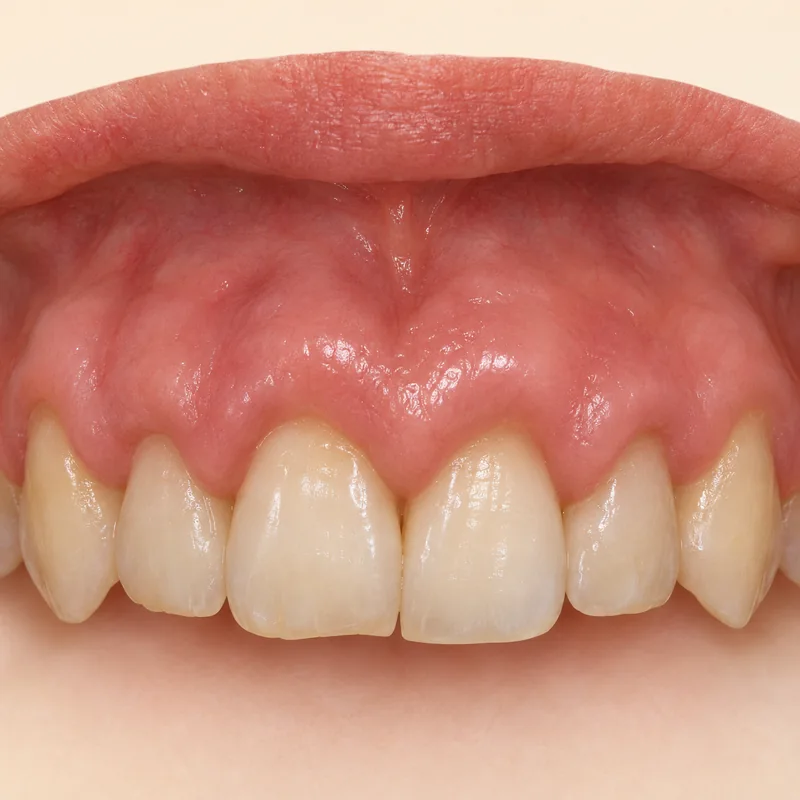
The gum may look thickened, softly swollen or more firmly enlarged. This description is not a diagnosis and does not automatically mean bone is being lost.
Examination, oral hygiene and a medication list help clarify the situation. Other illnesses can also cause changes; enlargement is not always caused by poor cleaning.
Inflammation and difficulty cleaning are considered. A possible medication change requires coordination with the prescriber. Further treatment or specialist assessment depends on the findings.
Larger gums, sometimes covering more of the crowns.
Changes over time, symptoms, cleaning, medicines and clinical findings.
Rapid swelling, fever or breathing and swallowing problems require the urgent action described below.
Three steps. No audio.
Each scene can also be selected manually.

Silent educational film with German on-screen text and simplified teaching images. Not a patient case or a promised treatment outcome. The full English explanation is available below.
The gum may look thickened, softly swollen or more firmly enlarged. This description is not a diagnosis and does not automatically mean bone is being lost.
Examination, oral hygiene and a medication list help clarify the situation. Other illnesses can also cause changes; enlargement is not always caused by poor cleaning.
Inflammation and difficulty cleaning are considered. A possible medication change requires coordination with the prescriber. Further treatment or specialist assessment depends on the findings.
Visible enlargement alone does not prove loss of the tooth-supporting tissues. Further findings are needed.
No. Do not stop or change medicines yourself. The dental team and prescribing clinician can agree a plan when necessary.
No. Careful, gentle cleaning matters, but it cannot remove every cause. Unexplained changes or enlargement that increases despite treatment need further assessment.
No. Enlargement may cover more of the crown. Recession exposes more tooth or root. Both need assessment within the overall supporting tissues.
An editorially suggested question for a conversation with Dr. med. dent. Niusha Barahmand Pour:
What may explain the change, and should my medicines be considered?
A new gum change deserves a specific examination.
Have a gum change assessedAppointment selection at DoctolibVisible enlargement alone does not prove loss of the tooth-supporting tissues. Further findings are needed.
Editorial research: . General information, not an individual diagnosis or treatment recommendation. Teaching illustrations are simplified and do not depict a patient case.