Does a white spot prove coeliac disease?
No. Many other causes can look similar.

Coeliac disease can be associated with symmetrical enamel changes during permanent tooth development. Matching teeth on both sides may show pale or discoloured bands, pits or grooves. These findings alone do not establish coeliac disease.
For training & practice ↓
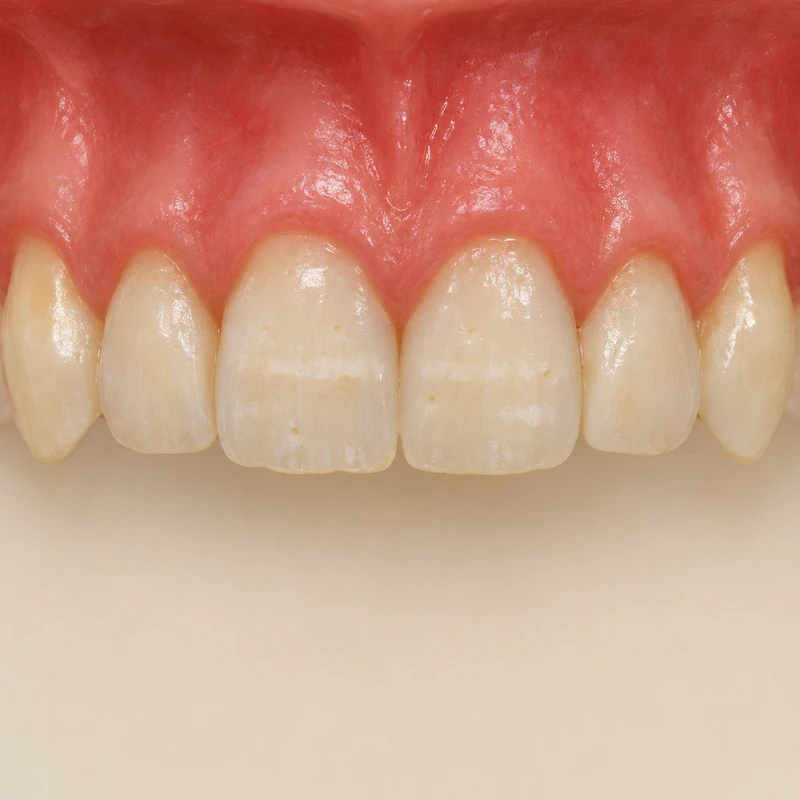
The dentist checks for similar changes on corresponding teeth on both sides. Permanent incisors or molars may be affected.
Enamel formed differently during development remains visibly altered after the tooth erupts. Dietary changes later cannot regrow missing enamel.
Digestive symptoms, growth problems or a family history are relevant. Medical assessment may include blood tests and, depending on the circumstances, a small-bowel biopsy.
No. Many other causes can look similar.
Do not start a gluten-free diet on your own before medical assessment. It can affect test results.
Established developmental enamel defects do not grow out.
Three steps. No audio.
Each scene can also be selected manually.

Silent film with English on-screen text and simplified teaching images.
A developmental defect is already present at eruption. New changes appearing afterwards need assessment on their own merits.
Yes. Signs outside the bowel and family history can inform assessment.
Dental findings may prompt investigation. A medical team makes the diagnosis through appropriate testing.
The extent, sensitivity and decay risk inform individual preventive or restorative care.
A question to bring along
Does the pattern suggest a developmental defect, and should I tell my doctor?
Arrange a dental examination for unexplained enamel changes.
Choose an appointmentAppointment selection at DoctolibThe pattern can suggest when the defects arose. A dental finding alone cannot diagnose coeliac disease.
Editorial research: . General information, not an individual diagnosis or treatment recommendation. Teaching illustrations are simplified and do not depict a patient case.
If you turn this on, this website stores which guides you open, separately from advertising preferences. The markers expire after a fixed 30-day period from activation. The list is not sent to us by this feature. You can turn it off here and delete the markers.
Other people using the same browser profile can also see the markers. German and English versions share one marker. Expired entries are removed the next time you open a page with this feature; deleting browser data may remove them earlier. “Viewed” means opened, not read or completed.