Where can a bite happen?
Where the moving tongue comes between the teeth.

Biting down while chewing or during a fall can cut the edge or tip of the tongue. The tongue has a rich blood supply, so even a small cut may bleed noticeably. Important features include whether the bleeding settles, how deep the wound is and whether the edges come together when the tongue is at rest.
For training & practice ↓
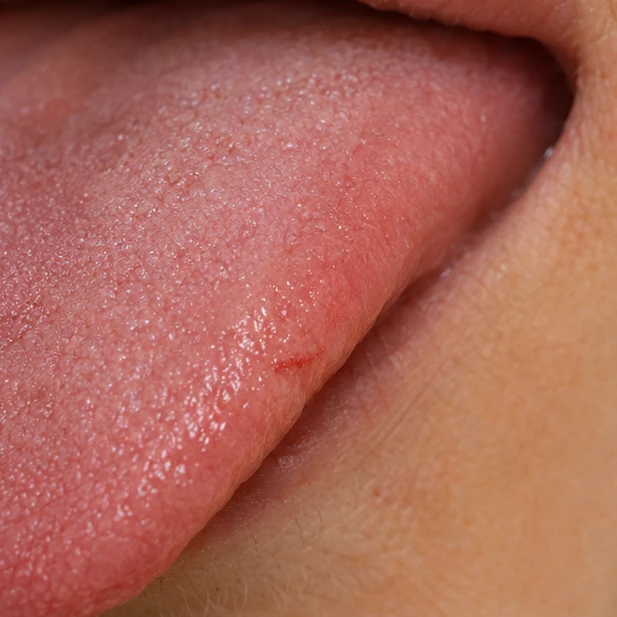
An accidental bite can leave a sore break at the edge of the tongue. Persistent bleeding needs assessment.
Steady pressure can help a small accessible wound stop bleeding. Keep hold of the gauze.
A blow can injure teeth as well as soft tissues. Tell the examining clinician if a piece of a tooth is missing.
Where the moving tongue comes between the teeth.
Bleeding, depth, location and whether the edges gape at rest.
Any loose tooth or missing tooth fragment.
Three steps. No audio.
Each scene can also be selected manually.

Silent film with English on-screen text and simplified teaching images.
A shallow indentation can have an intact surface. A bite can break the lining and cause bleeding.
For a small, accessible cut at the front of the mouth, apply steady pressure with clean gauze for a few minutes. Stay with young children and hold the gauze yourself. Call 112 in Germany if breathing becomes difficult or heavy bleeding cannot be controlled.
Many small wounds heal on their own. Get prompt medical care for a gaping injury to the tip, a deep wound or ongoing bleeding. Sticking out the tongue can make a cut look wider. How it sits at rest is one of the features clinicians consider. A Zurich study examined these findings in injured children.
A blow to the mouth can damage a front tooth as well as the tongue. Tell the clinician if a tooth is chipped, loose or feels different when you bite. Increasing swelling, fever or difficulty drinking also deserve assessment.
A question to ask
Do the wound edges gape at rest, and is a nearby tooth injured?
Seek prompt assessment for deep, gaping or persistently bleeding injuries. Call 112 in Germany for breathing difficulty or heavy uncontrollable bleeding.
Choose an appointmentAppointment selection at DoctolibA bite wound breaks the lining of the tongue. A shallow tooth impression can leave the surface intact. Healing by secondary intention means that the wound closes without suturing. The choice depends on the injury.
Editorial research: . General information, not an individual diagnosis or treatment recommendation. Teaching illustrations are simplified and do not depict a patient case.
If you turn this on, this website stores which guides you open, separately from advertising preferences. The markers expire after a fixed 30-day period from activation. The list is not sent to us by this feature. You can turn it off here and delete the markers.
Other people using the same browser profile can also see the markers. German and English versions share one marker. Expired entries are removed the next time you open a page with this feature; deleting browser data may remove them earlier. “Viewed” means opened, not read or completed.