Purpose?
Support mechanical surface cleaning.

Abrasives are cleaning particles that support mechanical cleaning of tooth surfaces. Examples include certain silicas and calcium carbonate. They can help remove external stains. A toothpaste’s abrasivity cannot be established from one ingredient name alone.
For training & practice ↓
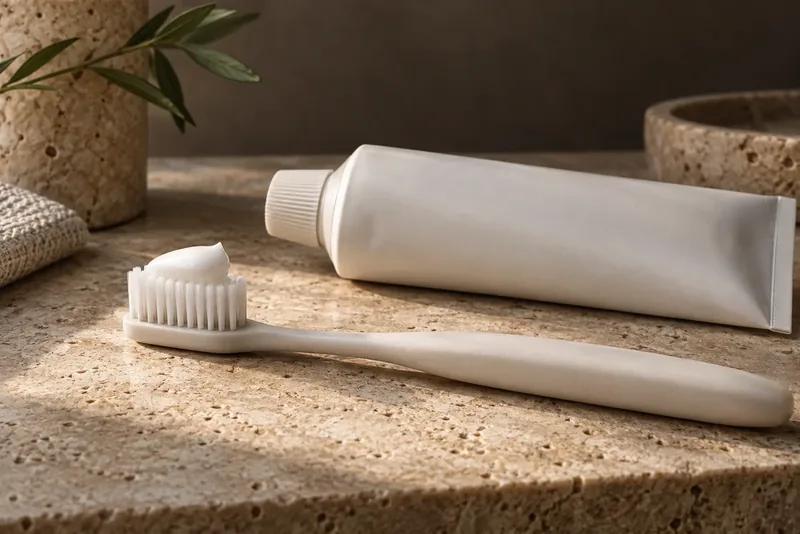
During brushing, particles work together with the brush and toothpaste formulation to remove deposits and external staining. They do not rebuild lost enamel.
RDA describes relative dentine abrasivity under standardised test conditions. It is not a percentage of enamel loss or a simple ranking of clinical safety.
With exposed roots or marked wear, toothpaste, brushing pressure and technique should be considered together. Acids may also be important. Fluoride protection remains a separate selection criterion.
Support mechanical surface cleaning.
No; the entire formulation matters.
Review toothpaste, brushing and other causes together.
Three steps. No audio.
Each scene can also be selected manually.

Silent educational film with German on-screen text and simplified teaching images. Not a patient case or a promised treatment outcome. The full English explanation is available as text.
Abrasives clean surfaces mechanically. Bleaching changes pigments chemically. Removing external stain does not necessarily lighten the internal tooth colour.
No. They are part of many toothpastes. The full formulation, how it is used and the existing tooth surfaces determine the assessment.
More pressure is not a useful strategy. External deposits and natural tooth colour are different; aggressive brushing can burden tissues and tooth surfaces.
Fluoride content and abrasivity are different properties. Choosing cleaning particles should not unintentionally discard protection against decay.
You can bring this question to your appointment:
Which toothpaste and brushing technique suit my tooth surfaces and decay risk?
Discuss your individual findings and whether a referral is appropriate.
Discuss your findingsAppointment selection at DoctolibAbrasives clean surfaces mechanically. Bleaching changes pigments chemically. Removing external stain does not necessarily lighten the internal tooth colour.
Editorial research: . General information, not an individual diagnosis or treatment recommendation. Teaching illustrations are simplified and do not depict a patient case.