Which part is angled?
The connecting component above the implant.

An angulated abutment is an angled connecting component between a dental implant and its restoration. It can compensate for a difference between the implant axis and the planned restoration direction. It does not move the implant itself. Suitability, loading, space and cleaning access must be considered together; an unfavourable implant position cannot be corrected without limits.
For training & practice ↓
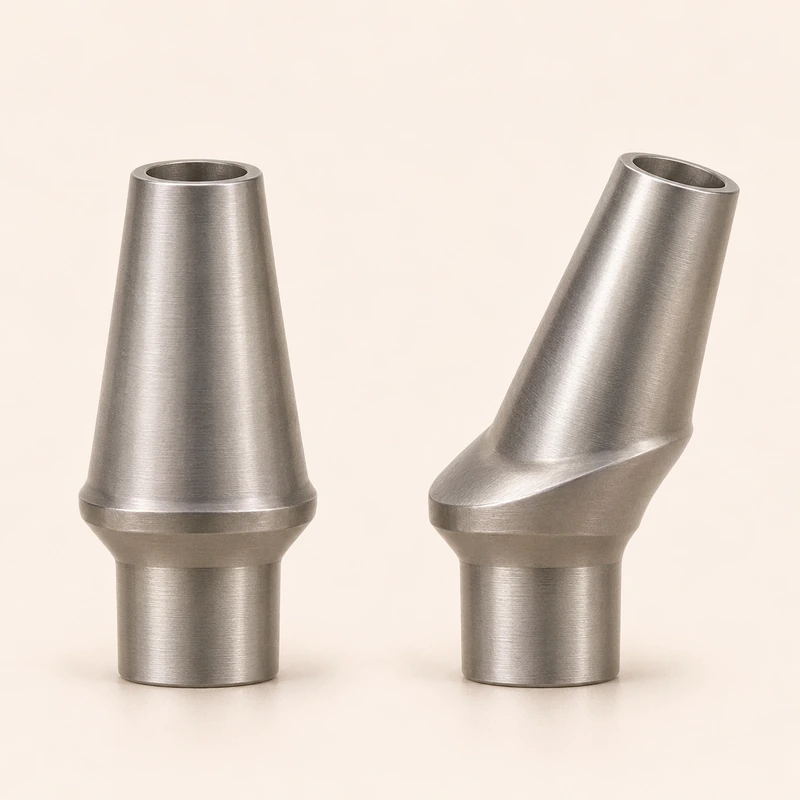
An implant follows a planned direction in the bone. The crown may need a different orientation. An angled abutment connects these directions within the limits of the system.
Angle, height, material and contour affect the restoration. Compatible components, sufficient space and cleanable contours matter. A greater angle is not automatically better.
The implant system and abutment should be identifiable. Loosening or changed loading needs assessment; do not adjust screws or abutments yourself.
The connecting component above the implant.
Planned compensation for different axes.
System design, loading, available space and tissues.
Three steps. No audio.
Each scene can also be selected manually.

Silent educational film with German on-screen text and simplified teaching images. Not a patient case or a promised treatment outcome. The full English explanation is available as text.
An angled abutment changes the restorative direction above the implant. It does not reposition an integrated implant or resolve every unfavourable bone or soft-tissue condition.
Not necessarily. Anatomy and restorative planning may require different axes. Suitability can only be judged from the complete clinical situation.
No. An angled screw channel changes access to the fastening screw. This differs from angulation of the whole abutment, although both concepts can occur together.
No. Connection, screw and abutment must suit the specific system. Selection and fastening require professional care.
You can bring this question to your appointment:
Why is an angled abutment planned, and how will loading and cleaning access be addressed?
An individual assessment can clarify the findings and whether referral is needed.
Arrange an assessmentAppointment selection at DoctolibAn angled abutment changes the restorative direction above the implant. It does not reposition an integrated implant or resolve every unfavourable bone or soft-tissue condition.
Editorial research: . General information, not an individual diagnosis or treatment recommendation. Teaching illustrations are simplified and do not depict a patient case.
If you turn this on, this website stores which guides you open, separately from advertising preferences. The markers expire after a fixed 30-day period from activation. The list is not sent to us by this feature. You can turn it off here and delete the markers.
Other people using the same browser profile can also see the markers. German and English versions share one marker. Expired entries are removed the next time you open a page with this feature; deleting browser data may remove them earlier. “Viewed” means opened, not read or completed.